Furniture Photography for Ecommerce: Studios vs AI — How Brands Choose (2026)
A 2026 decision framework for furniture brands choosing between traditional photography studios and AI imagery platforms — when each wins, when to mix.
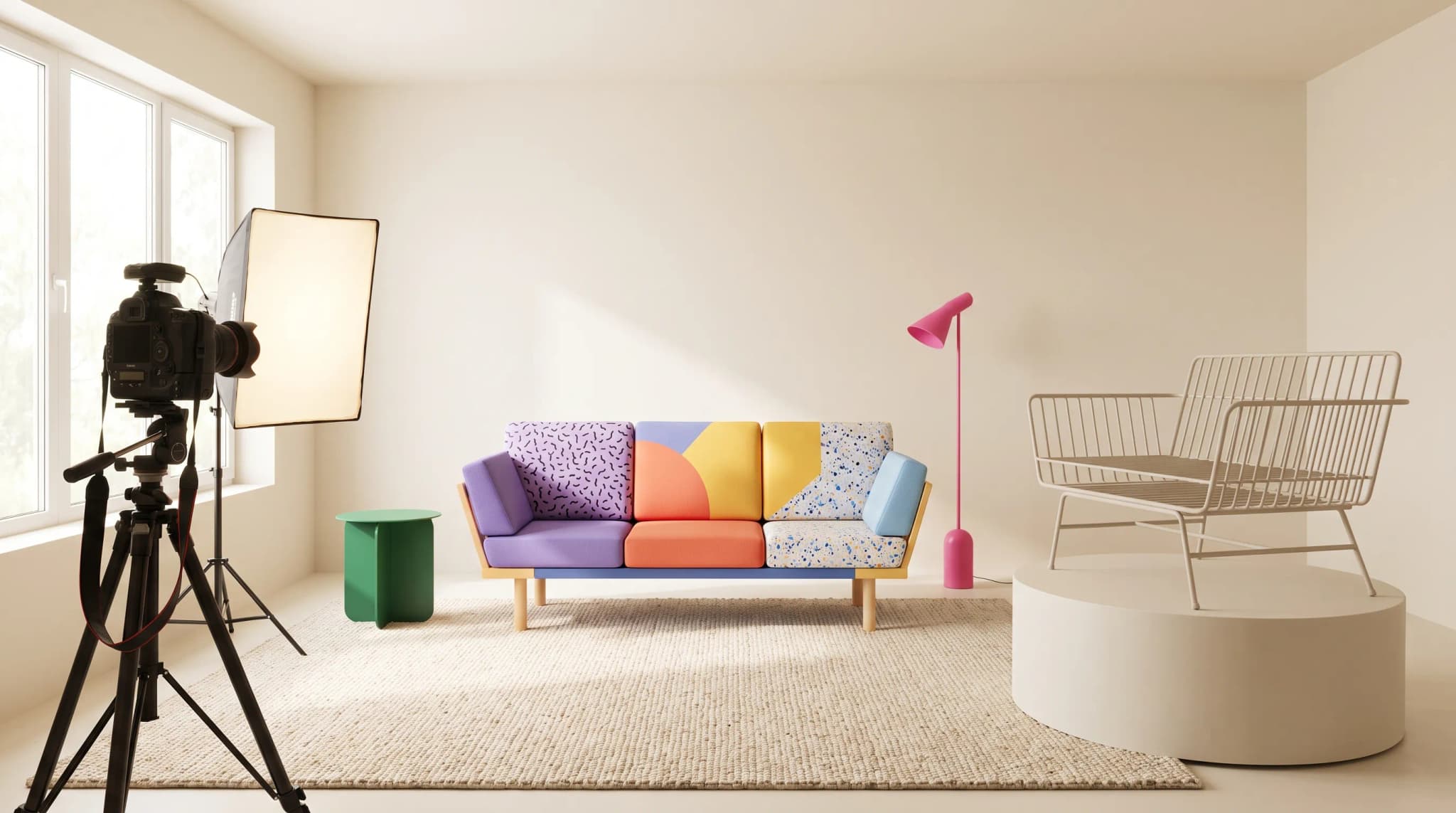
For most furniture brands in 2026, "studio vs AI" is the wrong question. The right one is which SKUs deserve studio time, which deserve AI, and which deserve both. This is a practical decision framework for ecommerce and B2B catalog teams — including how AI imagery platforms fit alongside a specialist studio.
Why this decision is back on the agenda in 2026
Three things changed in the last 18 months. AI imagery quality crossed the threshold where most buyers cannot reliably distinguish a well-prompted render from a photograph at thumbnail and mid-zoom sizes. Photography day rates kept climbing while the typical furniture catalog kept getting deeper. And ecommerce teams now report to revenue, not brand — imagery is judged against conversion and time-to-listing.
Ecommerce leads who already work with specialist furniture photography studios are revisiting their plan. They are not abandoning the studio. They are asking what belongs in the studio, what belongs in a generative pipeline, and how to govern both inside a single product information system.
This article is about catalog imagery, not interior design tools like SketchUp or Blender. For that comparison, see Furniture Connect vs CAD Tools.
What traditional furniture photography studios still do best
Specialist furniture photography studios — the ones with cycloramas, motorized turntables, in-house stylists, and a colorist who knows what walnut should look like on a calibrated monitor — are not a category in decline. They are a category that is narrowing to what only they can do well.
Hero shots for flagship SKUs. When a piece anchors a landing page, a printed trade catalog, or a wholesale line sheet, a real photograph still wins. Texture, micro-shadow, and the way light wraps a hand-rubbed finish are signals AI imagery can approximate but not yet guarantee at the level a senior buyer expects.
Material-truth shots. Solid wood grain, marble veining, leather pull-up, bouclé pile, brushed brass patina. Anything where natural variation is part of what you are selling needs to be the actual piece. Returns from B2B accounts are expensive enough that the photography line item is rounding error against a single disputed shipment, as Baymard's product page research consistently shows when material confidence drops.
Editorial and brand campaigns. Set design, prop styling, and the directorial eye of a photographer is not a prompt. When you need a campaign that anchors a brand refresh, hire the studio.
Compliance-sensitive categories. Contract furniture for healthcare, hospitality, and government RFPs often requires photographic evidence of the actual delivered SKU. Generative imagery is not the right tool for those records.
What AI imagery does better than studios
AI imagery platforms now handle the long tail of catalog work that studios were always uncomfortable with — the work that was either skipped, outsourced to a cheaper supplier, or delivered late.
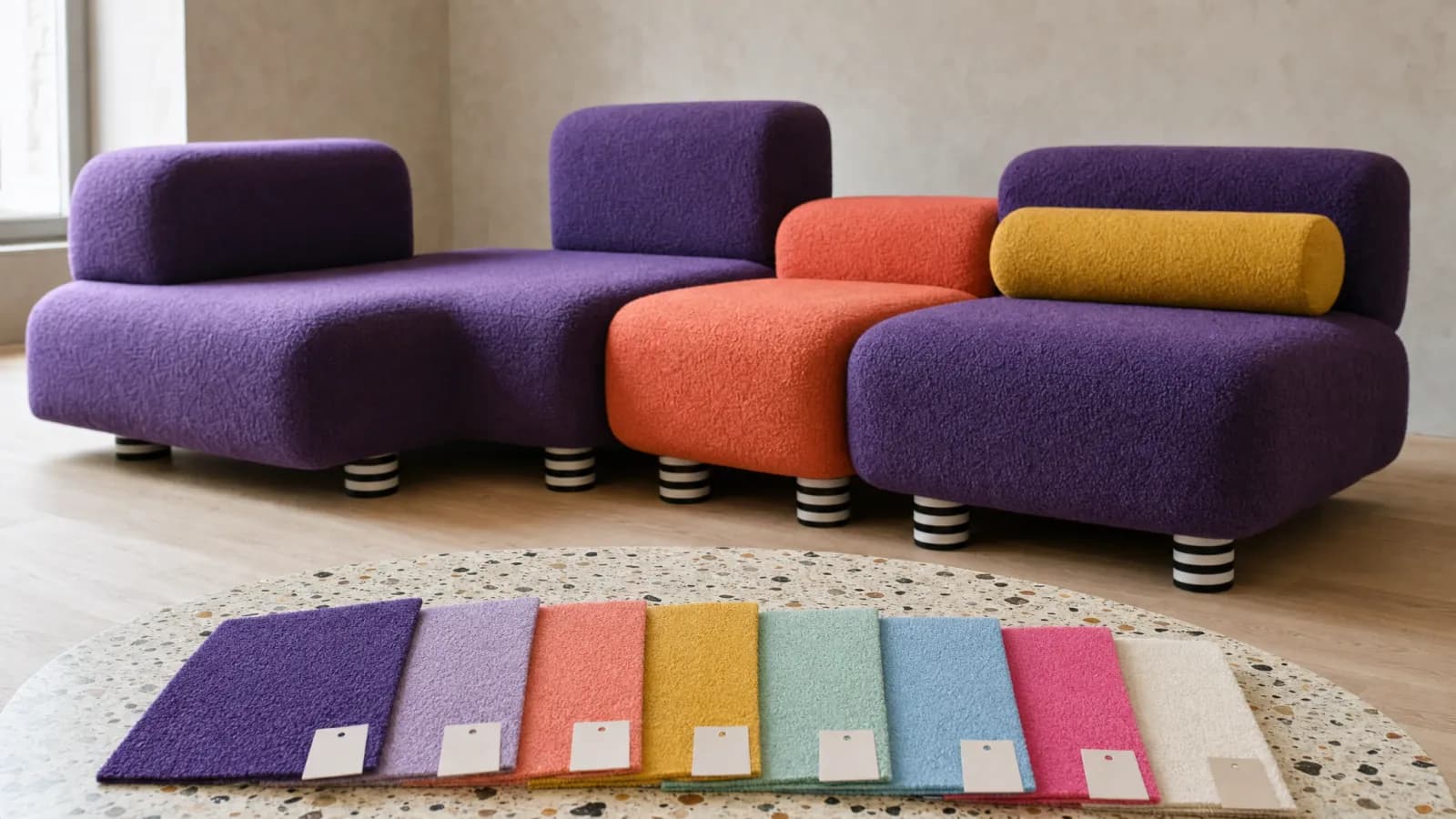
Configurable SKUs at depth. A sofa in 40 fabrics across three frame sizes and two leg finishes is 240 visual variants. No studio shoots that. Either the brand ships with swatch chips and one base photo, or it generates the variants. Shopify Plus B2B guidance shows variant imagery is one of the top drivers of buyer confidence in B2B flows.
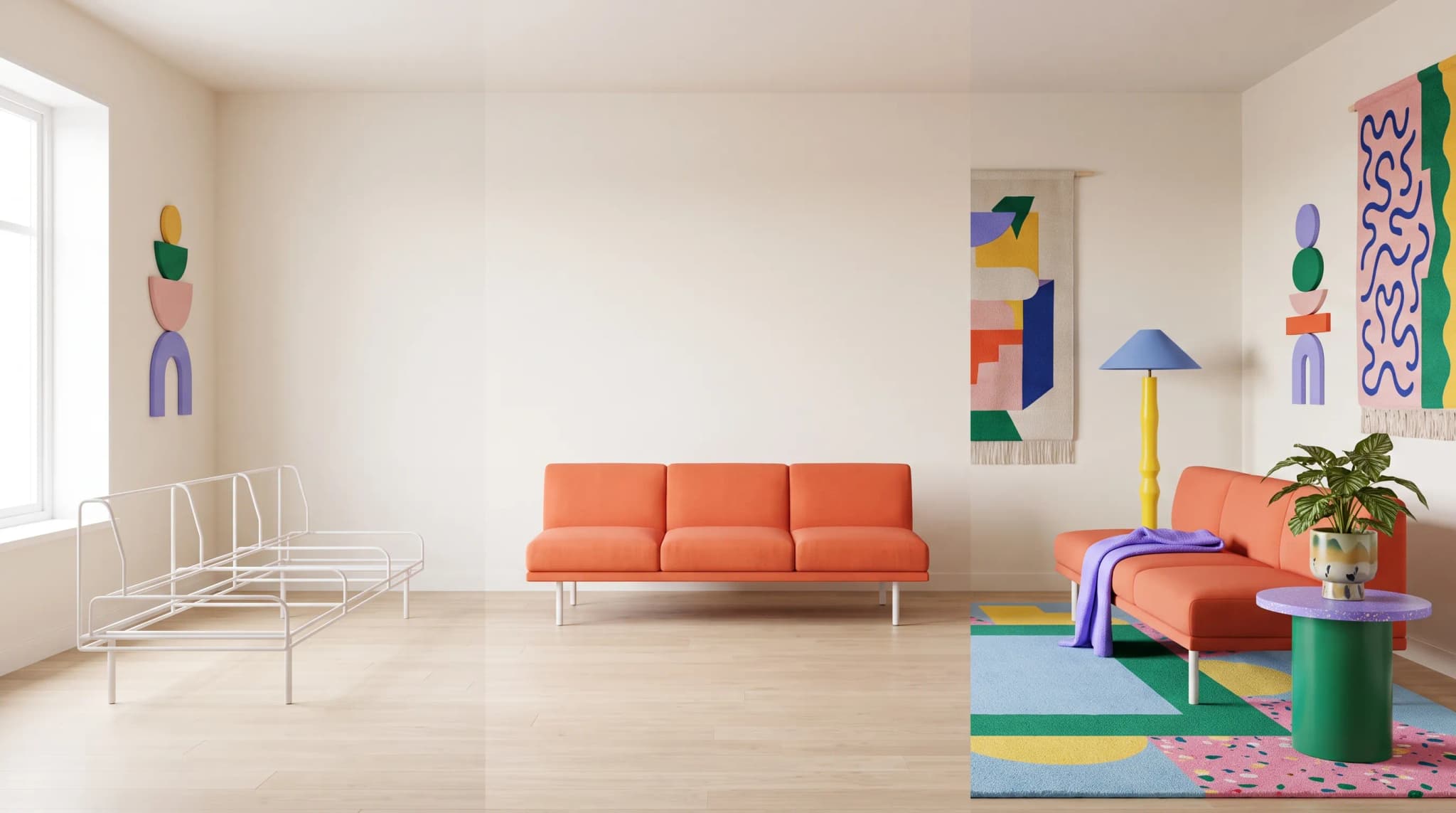
Lifestyle and room context. Putting the same dining table in a Scandinavian apartment, a Brooklyn loft, and a Côte d'Azur villa is location scouting, set rental, and a three-day shoot. With AI it is three prompts against the same product cutout. The product remains photographically accurate; only the environment is synthesized.
Re-staging and seasonal refreshes. Autumn merchandising, holiday creative, and regional campaigns historically required re-shoots or expensive post-production. AI handles the swap of accessories, wall colors, and styling in hours.
Speed to listing. For brands launching dozens of SKUs per quarter, the bottleneck is the imagery queue. AI cuts time-to-listing from weeks to days, which compounds across a year of releases.
Cost at scale. Per-SKU economics shift dramatically. The savings calculator gives a realistic estimate based on your SKU count.
The decision framework: 6 questions that determine the right mix
Use these six questions, in order. Each one moves SKUs into "studio," "AI," or "both."
- Is the SKU material-led? If the buying decision hinges on natural material variation (solid wood, stone, leather, hand-finished metal), the hero image should be a real photograph. Studio.
- Is the SKU configurable? If it has more than five visual variants (fabric, finish, size, leg style), variants should be AI-generated against a photographed base. Both.
- Is the buyer a professional? Contract, hospitality, and trade buyers viewing tear sheets and spec packs need photographic evidence for the hero shot. Studio for hero, AI for context.
- Is the SKU a flagship or a long-tail item? Flagships earn studio time. Long-tail items earn AI. Most catalogs are 10% flagship and 90% long tail.
- Will the image be printed or shown above the fold? Print and above-the-fold hero placements still reward studio quality. Below the fold, in carousels, in PDP variant pickers, AI is usually indistinguishable.
- How fast does this need to ship? If the listing has to be live in days, not weeks, AI is the only realistic answer.
Decision matrix at a glance
| Criterion | Studio wins | AI wins |
|---|---|---|
| Hero shot for flagship SKU | Yes | No |
| 40+ configurable variants | No | Yes |
| Material-led product (wood, stone, leather) | Yes | Hybrid only |
| Lifestyle / room context variants | Hybrid | Yes |
| Trade catalog hero | Yes | No |
| PDP variant picker thumbnails | No | Yes |
| Seasonal re-stage of existing SKU | No | Yes |
| Above-the-fold print campaign | Yes | No |
| Long-tail SKU with low traffic | No | Yes |
| Time-to-listing under 7 days | No | Yes |
When to use studios only
A studio-only approach still makes sense for a narrow set of brands. If you sell fewer than 200 SKUs, all of them are material-led, and your buyers are predominantly trade or interior designers paying premium prices, the volume does not justify a second pipeline. Stay with your studio. Invest in a good digital asset management workflow so the assets you do produce are reused everywhere they belong.
Brands that fit this profile typically share three traits: a tight SKU count, a brand promise built on craft and provenance, and a customer base that reads the imagery as part of the product. For them, generative imagery is a distraction.
When to use AI imagery only
AI-only works for high-volume, low-margin, or fast-fashion-style furniture brands where every SKU is a variant of a known archetype and buyers are consumer rather than trade. Flat-pack, dropship, and marketplace sellers running thousands of listings rarely have the budget or the brand premium to justify studio shoots, and their buyers are making decisions based on price, dimensions, and reviews more than on imagery craft.
A platform like Furniture Connect is designed for exactly this workflow — AI imagery generation paired with B2B catalog and product information system features, so the imagery and the structured data ship together rather than in two disconnected processes. The platform uses a mix of underlying AI models with intelligent routing to match the right engine to the right shot type.
When to use both (most brands)
The realistic answer for most brands with more than 200 SKUs and a recognisable brand position is a mixed pipeline. Here is what that looks like in practice.
Studio handles: hero shots for the top 10–20% of SKUs by revenue, material-truth detail shots, trade catalog images, brand campaigns, and editorial.
AI handles: variant imagery for configurables, lifestyle and room-context shots, seasonal restages, regional creative, comparison and feature callouts, and the entire long tail of low-traffic SKUs.
Both handle: the middle tier — usually photographed once at studio quality, then re-staged and re-contextualised with AI across rooms, lighting setups, and campaigns. This is where most of the leverage lives. One studio day produces dozens of derivative assets, all consistent because they share a photographed base.
Governance is what makes a mixed pipeline work. Both pipelines need to feed a single PIM and DAM so merchandisers can see which SKUs have studio assets, which have AI assets, which have both, and which still need work. Without that visibility, the mixed pipeline becomes two siloed pipelines that drift apart. A purpose-built studio workflow is one example of how the AI side can be operated as a peer to traditional photography rather than a replacement.
How to model the unit economics
The honest calculation has three inputs: cost per finished image, total images required per SKU, and reshoot rate. Most brands underestimate the second and third.
A typical ecommerce furniture SKU now needs 8–12 images: hero, alternate angles, lifestyle in two settings, detail shots, scale, and at least one variant view. Configurable SKUs can need 30 or more. Across a 2,000-SKU catalog refreshed annually, that is 16,000–60,000 finished images per year.
At studio rates that Furniture Today industry coverage suggests are typical for specialist work, hero-quality production runs into seven figures annually at the upper end. The right comparison is not "studio vs AI" on a single image but blended cost per required image across the catalog, including reshoots, variants, and seasonal refreshes.
Use the pricing page and savings calculator to model your numbers. McKinsey's retail digital transformation research finds the brands winning the next decade resolve this cost-per-asset question deliberately.
Model the briefs, revisions and channel outputs in the catalog-scale lifestyle imagery workflow alongside the generation cost.
What a pilot looks like for each path
If you are currently studio-only and evaluating AI, the lowest-risk pilot is: pick 50 long-tail SKUs that are not currently photographed, generate AI imagery for them, list them, and compare conversion to similar SKUs that do have studio photography. Most brands find conversion is within a few percentage points, sometimes higher, and time-to-listing collapses.
If you are currently AI-only and evaluating studio investment, the pilot is the inverse: identify your top 20 revenue SKUs, commission studio hero shots, and measure whether conversion or AOV lifts enough to justify the line item. Often it does for the top tier and does not for the rest.
If you are evaluating both from scratch, run them in parallel on the same 50-SKU set and let the data decide. The case studies page has examples of brands that took each path. When you are ready to scope a pilot of the AI side, request a demo.
Frequently asked questions
Which furniture photography approach offers the best quality for showroom and catalog use?
For hero shots of flagship and material-led SKUs viewed in print or above the fold, specialist furniture photography studios still produce the highest perceived quality. For variant imagery, lifestyle context, and long-tail SKUs, modern AI imagery platforms produce results that most buyers cannot distinguish from photography at typical ecommerce viewing sizes. The best-quality catalog overall is usually a mixed one.
Are AI furniture images good enough for ecommerce in 2026?
For most ecommerce contexts — PDP variant pickers, carousels, lifestyle context, and long-tail SKUs — yes. BigCommerce's B2B imagery guidance and broader Statista ecommerce data both indicate that buyers respond to image completeness and consistency more than to whether each asset was photographed. The remaining hold-outs are material-led hero shots and trade catalog work.
Does Google penalise AI-generated product imagery?
No. Google Search Central's guidance on AI content applies to imagery as well: the question is whether the content is helpful and accurate, not how it was produced. Mislabeling AI imagery as photographic evidence in regulated contexts is a separate compliance issue, not an SEO one.
How do I keep brand consistency across studio and AI imagery?
Brand consistency comes from governance, not from picking one production method. Lock down lighting style, color treatment, background palette, and styling rules in a brand guide, then enforce it on both pipelines. A shared DAM with metadata tagging is the practical mechanism. For deeper detail on what consistent listings look like, see Anatomy of the Perfect Product Listing and Avoiding the Uncanny Valley in Furniture Renders.
Frequently asked questions
How do I decide which furniture SKUs go to a photography studio and which go to AI?
Run six questions in order. Is the SKU material-led, where solid wood, stone or leather variation drives the purchase? Studio. Does it have more than five visual variants? AI against a photographed base. Is the buyer a trade or contract professional who needs photographic evidence? Studio hero, AI context. Is it a flagship or a long-tail item? Flagships earn studio time. Will it be printed or shown above the fold? Studio. Does it need to ship in days, not weeks? AI is the only realistic answer.
How many product images does a furniture SKU need for ecommerce?
A typical ecommerce furniture SKU now needs eight to 12 images: hero, alternate angles, lifestyle in two settings, detail shots, scale and at least one variant view. Configurable SKUs can need 30 or more. Across a 2,000-SKU catalog refreshed annually that is 16,000 to 60,000 finished images a year, which is why the honest cost comparison is blended cost per required image, including reshoots, variants and seasonal refreshes, not the price of a single studio shot.
Can a furniture brand run on studio photography only?
Yes, for a narrow profile. If you sell fewer than 200 SKUs, all of them material-led, and your buyers are mostly trade or interior designers paying premium prices, a second pipeline is hard to justify. Brands that fit share three traits: a tight SKU count, a promise built on craft and provenance, and customers who read the imagery as part of the product. For them the better investment is a digital asset management workflow that reuses every asset produced.
What is the lowest-risk way to pilot AI imagery alongside a photography studio?
Pick 50 long-tail SKUs that aren't currently photographed, generate AI imagery for them, list them, and compare conversion against similar SKUs that do have studio photography. Most brands find conversion within a few percentage points, sometimes higher, while time-to-listing collapses. If you're AI-only and weighing studio spend, invert it: commission hero shots for your top 20 revenue SKUs and check whether conversion or order value lifts enough to justify the line item.
Bottom line
Studios and AI imagery are not competitors in 2026. They are different tools that solve different parts of the same catalog problem. Brands that pretend otherwise — either by clinging to studio-only orthodoxy or by going AI-only and hoping nobody notices on the flagship SKUs — are leaving margin, speed, or quality on the table. The brands winning the next decade are the ones running both pipelines, governed by a single PIM, with clear rules for which SKU goes where.