Why AI Shopping Assistants Struggle With Configurable Furniture
A shopper asks for a sectional by size, orientation, material and price. Learn why an available product can remain invisible when its variant data is ambiguous.
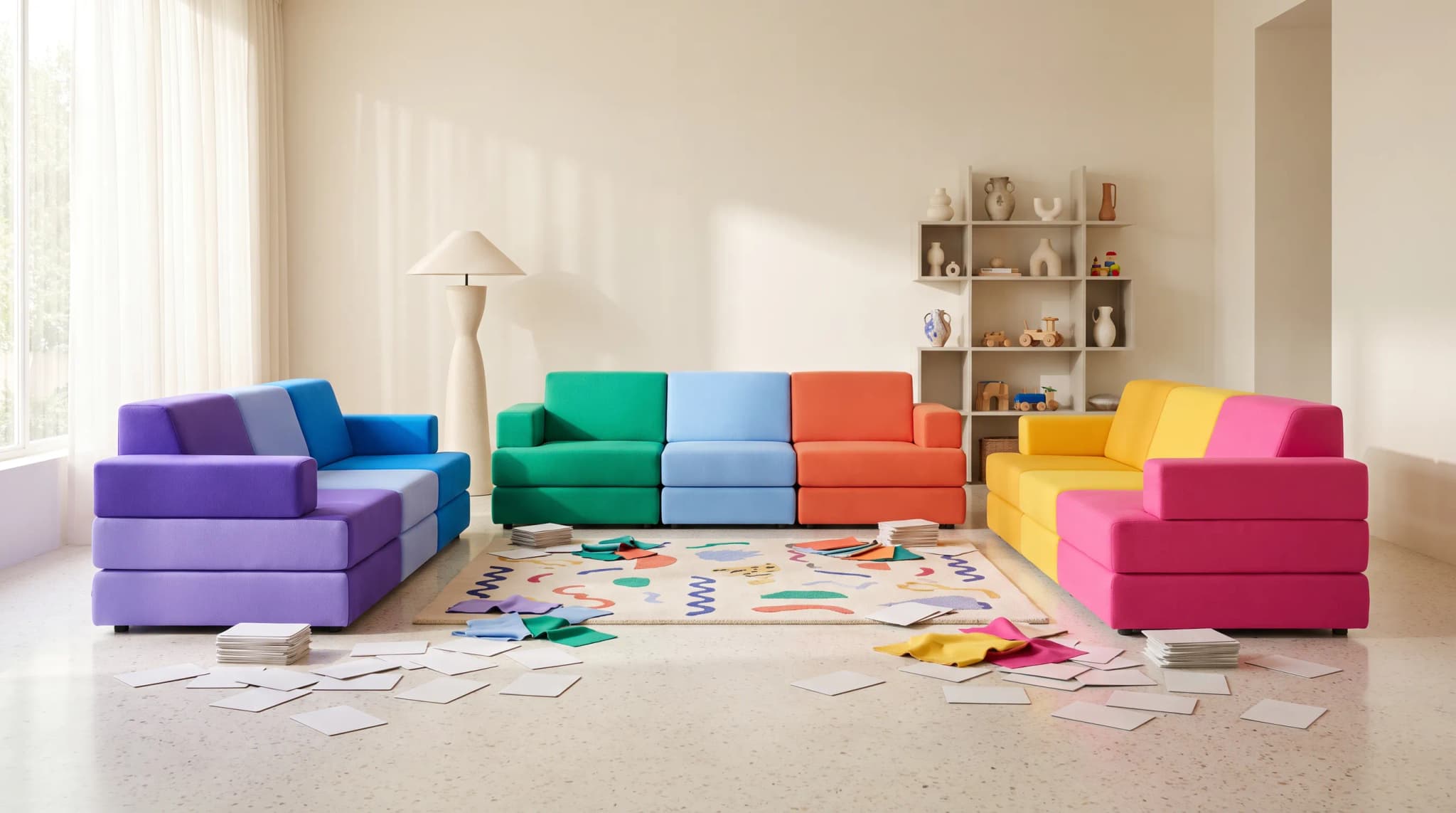
A shopper asks for a left-facing sectional under 280cm, in a mid-gray performance fabric, below a stated budget and available within their deadline.
You sell a combination that fits. But can the catalog prove that every constraint belongs to the same purchasable version?
That is where configurable furniture becomes difficult for AI shopping systems. The product may exist, but its size sits on the parent, its orientation is buried in a title, its material properties live in a PDF and its price belongs to another variant.
AI needs relationships, not a pile of matching words
Traditional search can send a shopper to a broad product page and let them work through the configurator.
An AI recommendation may need to do more before presenting the product: identify the relevant variant, match the constraints and determine whether the price and availability apply to that version.
Writing “left-facing,” “performance fabric” and “280cm” somewhere on the page helps discovery. It does not prove that those values describe one buildable combination.
The difference is between a catalog saying:
We sell gray sectionals in several sizes.
and:
SKU SEC-280-LH-GRY is the left-facing, 278cm version in the named performance fabric, at this price and availability.
The second answer gives a system something it can check.
Where configurable furniture becomes ambiguous
Parent and variant relationships are implied
Forty product rows may represent one sofa in 40 covers. Without a shared parent identifier, they can look like unrelated products with similar names. The furniture product data model sets out the identity and variant layers that prevent it.
Size and orientation are labels
“Large left-hand chaise” in a title is harder to use than separate, defined fields for width and orientation.
Material properties sit outside the material record
The cover code is in the product data, while composition, care and performance live on a swatch card or certificate. “Suitable for a home with a dog” cannot be resolved from a grade number alone.
The catalog allows combinations the factory does not
Every cover and finish appears beside the product, but not every combination is buildable. If the restrictions are not recorded, a system can assemble a plausible product that does not exist. Sales teams hit the same wall when quoting configurable furniture.
The important facts are trapped in images or PDFs
A dimension drawing may be clear to a person and absent from the fields a shopping system reads. The same is true of certificates, care guides and photographed labels.
Images have no variant identity
The gallery contains the right cover, but nothing connects that image to its SKU or material code. The visual evidence exists without a machine-readable relationship. The furniture asset metadata template covers the fields that make the connection.
What the major product formats can express
Google’s ProductGroup structured data lets websites connect variants to a parent product using properties such as hasVariant, productGroupID and variesBy.[1]
Google’s supported variesBy properties include color, size, material and pattern, but not furniture-specific axes such as orientation or arm style. Its technical guidance also says each variant needs a unique ID and should be directly preselectable through a distinct URL or URL parameter, with the matching image, price and availability shown.[1]
Merchant Center goes further through its variant_option field, while still requiring standard fields such as color, size and material when they apply. It also requires variants to be grouped consistently and warns that missing or conflicting data can cause disapprovals or display problems.[2]
These formats are useful, but they are destination models, like every retailer or marketplace template described in how furniture product content reaches retailers and marketplaces. A furniture business still needs a richer internal record so it can decide how orientation, components and compatibility should be represented in each one.
What a machine-readable furniture catalog needs
Stable identifiers. Keep the same product and variant identities across the source catalog, website and feeds.
Typed values. Store dimensions as numbers with units, not one text string. Keep color separate from the marketing name of the colorway.
Explicit variant groups. State the parent and the fields that vary.
A retrievable version of each sellable combination. A page or feed should expose the chosen variant’s own price, availability and image.
Current availability. An in-stock item and a made-to-order version are different answers to a time-sensitive request.
Connected evidence. Link the image, specification and material documents to the variant they support.
Known compatibility. Record which option combinations are actually buildable. Do not assume that listing all the choices expresses the rules between them.
A test using your own customer questions
Write five requests that combine real constraints. Include size, orientation, finish, material performance, price or lead time.
For each one, ask:
Could somebody determine the answer from the catalog alone, without interpreting a diagram, opening an unlinked PDF or asking which price belongs to which version?
Work through every field. If the answer depends on product knowledge held by a person, the catalog is not yet able to state the match unambiguously.
Where Furniture Connect fits
Agentic Catalog structures products and variants, holds dimensions and pricing as fields, and keeps materials as reusable records with codes, color and swatch information. DAM connects images and documents to the products and variants they support.[3]
This prepares the source catalog. It does not, by itself, guarantee inclusion in an answer from ChatGPT, Gemini, Perplexity or another assistant. Furniture Connect does not currently publish a direct ingestion route into those systems. Websites, feeds, crawler access and the destination’s own rules remain separate parts of the route.
That distinction matters for AEO: better product structure gives external systems clearer facts to retrieve, but no vendor can promise a recommendation simply because the data is tidy.
Fix the source before the surface
Start with one complex product and one precise customer request. Make sure the catalog can identify a single buildable variant and return its correct size, material, image, price and availability.
Once that works internally, use the catalog readiness checklist for AI shopping agents to check the website, feeds and crawler layer.
Before publication, run the furniture ecommerce readiness checklist across the full listing, including images and delivery information.
Frequently asked questions
Why do AI shopping assistants struggle with configurable furniture?
Because an AI recommendation has to do more than match words. Before presenting a sectional, it needs to identify the relevant variant, match the shopper's constraints and confirm that the price and availability apply to that version. In many furniture catalogs the size sits on the parent, orientation is buried in a title, material properties live in a PDF and the price belongs to another variant, so an available product can't be proven to fit.
What makes furniture variant data ambiguous to machines?
Parent and variant relationships are implied rather than stated, so 40 rows for one sofa in 40 covers look like unrelated products. Size and orientation are text labels instead of defined fields. Material composition and care sit on a swatch card rather than the material record. The catalog lists combinations the factory won't build. Dimensions and certificates are trapped in images or PDFs, and gallery images carry no link to their SKU or material code.
Can Google product structured data describe configurable furniture?
Partly. Google's ProductGroup markup connects variants to a parent, and its supported variesBy properties cover color, size, material and pattern, but not furniture-specific axes such as orientation or arm style. Each variant needs a unique ID and a directly selectable URL showing its own image, price and availability. Merchant Center adds a variant option field. These are destination formats; a furniture business still needs a richer internal record to decide how orientation, components and compatibility map onto each.
Does structuring my catalog guarantee AI assistants will recommend my products?
No. Structuring products, variants, dimensions, pricing and materials prepares the source catalog and gives external systems clearer facts to retrieve, but websites, feeds, crawler access and each assistant's own rules remain separate parts of the route. Furniture Connect, for example, doesn't publish a direct ingestion route into ChatGPT, Gemini or Perplexity. No vendor can promise a recommendation simply because the data is tidy; fix the source first, then check the surface.