Why Configurable Furniture Is So Difficult to Quote Accurately
A sectional quotation is a combination of size, orientation, cover and finish. Learn where manual quoting breaks and what must be structured first.
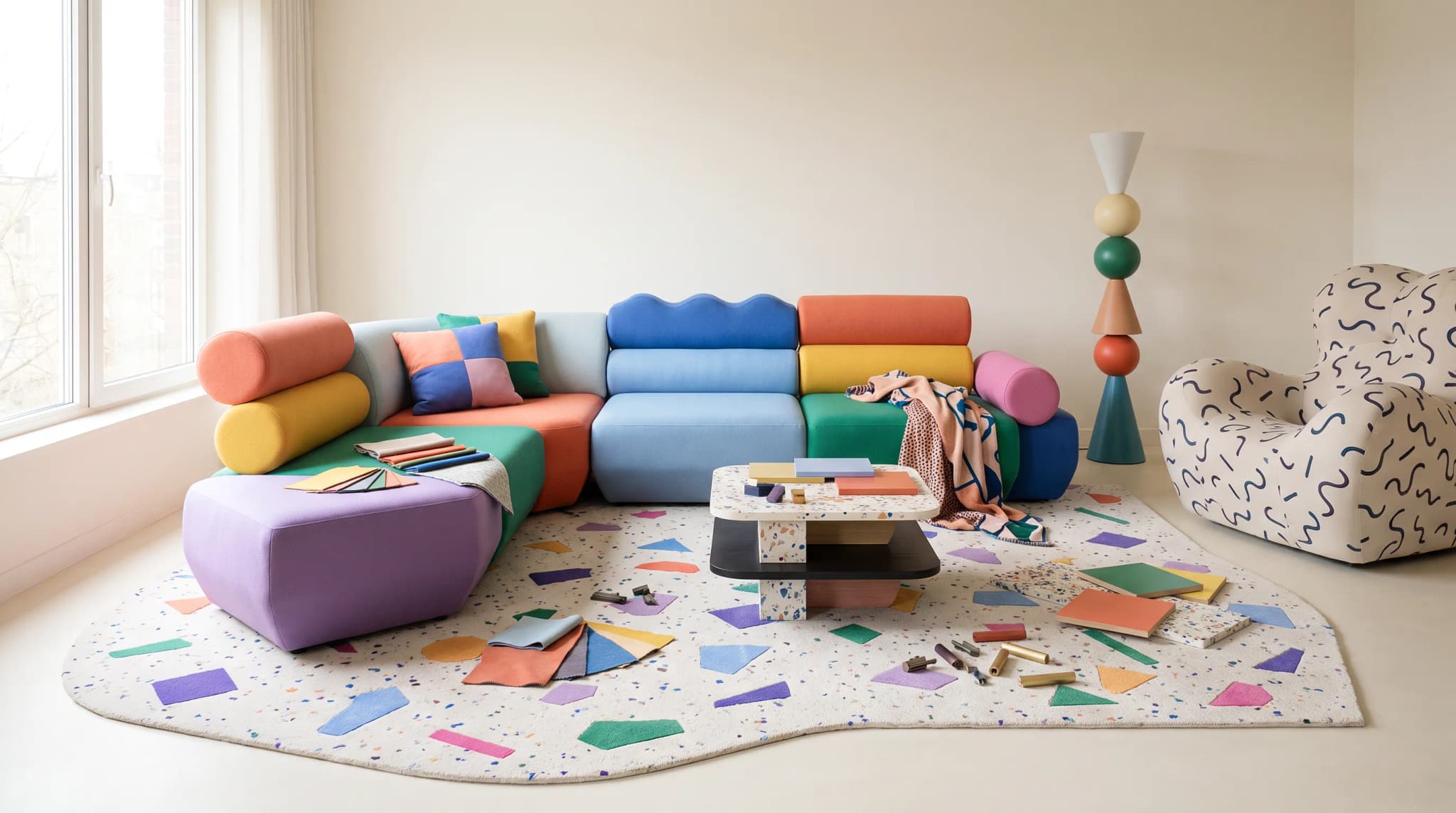
A client does not simply choose a sectional. They choose its footprint, orientation, cover, fabric grade, leg finish and quantity.
Each answer is straightforward. The difficulty is keeping them together. The quote is only correct if the combination can be built, the price matches it and the image shows it.
That makes configurable furniture a data-relationship problem, not just a longer product list. The furniture product data model describes the variant layer those relationships live in.
Product, variant and configuration are different things
These terms are often used interchangeably, but the distinctions matter when money is attached.
- Base product: the shared design or range
- Option group: an axis of choice, such as size, cover or orientation
- Option value: the selected choice within that group
- Variant: a specific sellable version of the product
- Configuration: the selections made for this customer, sometimes including modular components and quantities
- SKU: the identifier against which the business prices, orders or stocks the item
Errors appear when information sits at the wrong level. A base price is used for a higher fabric grade. The range image is used for a specific cover. A lead time held against the frame is applied to a material that is not in stock.
The combinations multiply quickly
Consider an illustrative sectional range with four footprints, three arm styles, two orientations, 40 covers and three leg finishes.
That is 4 × 3 × 2 × 40 × 3, or 2,880 possible combinations. This is an example, not an industry benchmark.
Adding one new arm does not add one more item to maintain. It affects every compatible footprint, orientation, cover and leg finish. The work grows through multiplication.
Where manual quotes go wrong
The combination cannot be built
A spreadsheet can contain every option without expressing which options require or exclude others. The salesperson selects a real size and a real mechanism, but the factory does not offer them together.
The price belongs to another version
Steelcase's published pricing tool provides a clear example: upholstery groups, arms, lumbar support and base finishes can all add separate amounts to the same chair.[1] A quote built from the frame price alone is incomplete when the selected cover or finish changes it.
Left and right get separated from the SKU
Orientation is a small label with a large consequence. If it is held only in a product title or note, it can be lost when the item is copied into the quote.
The image shows a nearby combination
The right frame in the wrong material is still the wrong image. It can create an approval against a product the customer will not receive.
Modular components are missed
A sectional may need a particular corner unit, connector or number of arms. The visual configuration can look complete while the line items are not.
Why a flat list is not enough
A list can show valid combinations, but it does not explain the rule behind them. When a cover, mechanism or frame changes, somebody has to work out which rows are affected.
The contract furniture industry already uses structured formats for this reason. The IBA Forum describes OFML as carrying commercial and configuration-relevant product data and supporting quote and order information.[2] Configura likewise accepts structured catalog formats including SIF and OFDA XML.[3]
Consumer channels also require explicit grouping. Google Merchant Center tells merchants to submit variants as separate products, join them with an item group ID and provide the attributes that distinguish them.[4]
The exact format changes by destination, which is why every retailer wants product data in a different format. The need to state the relationships does not.
What needs to be structured first
- A product hierarchy. Put shared facts on the parent and changing facts on the variant.
- Named option groups. Keep cover, grade, size, orientation and finish as separate fields.
- A definitive set of buildable combinations. The business needs one answer to “can we make this?”
- Pricing attached to the choices that change it. Do not leave an uplift inside a PDF note.
- Images connected to what they depict. Record the SKU, variant, material and angle, as set out in the furniture asset metadata template.
The customer should be able to see the same selection in the identifier, description, image and price. If those four disagree, the quote is ambiguous, and so is the product to any AI shopping assistant trying to recommend it.
Build status and effective dates into the record too; the guide to outdated prices and discontinued options in furniture quotes explains why old choices stay in circulation.
Where Furniture Connect fits
The Furniture Connect catalog structures products and variants and keeps materials as reusable records rather than repeated free text. DAM keeps imagery and documents connected to the relevant SKU and variant. Studio can generate imagery for combinations that were not photographed.
Furniture Connect Quotes can suggest the product and variant for the quote. If the chosen variant needs a new image, the user can ask the Agent to generate it. Once it is ready, the Agent asks whether the image should be saved to that catalog variant.
There is an important boundary. Furniture Connect does not have a compatibility engine for “requires” and “excludes” rules. It creates the combinations explicitly defined as variants, rather than applying a separate declarative rule layer. If a range depends on those rules, establish how your team will maintain and validate them.
Test the hardest product in the range
Choose the product your team hesitates to quote. List every decision required, every combination the factory will not build, every selection that changes price or lead time, and the image available for each version.
Any answer that lives only in someone’s head is a likely quotation error. Any answer spread across several files is a likely delay. The next article explains why those delays persist even when the sales team knows the range well.
Frequently asked questions
Why is configurable furniture so hard to quote accurately?
Because a quote for a sectional isn't one product but a combination of footprint, orientation, cover, fabric grade, leg finish and quantity. Each choice is simple on its own; the difficulty is keeping them together. The quote is only right if the combination can actually be built, the price matches that combination and the image shows it. That makes configurable furniture a data-relationship problem rather than a longer product list.
What is the difference between a product, a variant and a configuration?
The base product is the shared design or range. An option group is an axis of choice such as size, cover or orientation, and an option value is the selection within it. A variant is a specific sellable version, a configuration is the set of selections made for one customer, and the SKU is the identifier the business prices, orders and stocks against. Errors appear when a fact sits at the wrong level.
Where do manual quotes for configurable furniture go wrong?
Common failures include selecting a size and mechanism the factory doesn't offer together, using the frame price when the chosen cover or finish adds to it, losing left or right orientation because it was only in a title or note, showing an image of a nearby combination in the wrong material, and missing modular components such as corner units or connectors, so the drawing looks complete while the line items are not.
What should be structured before quoting configurable furniture?
A product hierarchy with shared facts on the parent and changing facts on the variant; named option groups so cover, grade, size, orientation and finish are separate fields; one definitive set of buildable combinations; pricing attached to the choices that change it rather than an uplift in a PDF note; and images recorded against the SKU, variant, material and angle they depict. Identifier, description, image and price should all agree.