Why 'Showroom-Quality' Virtual Furniture Photography Isn't a Vendor Choice — It's a Workflow Decision
Procurement teams keep shopping for the best virtual furniture photography vendor. The real question is which workflow produces showroom-quality output at catalog scale.
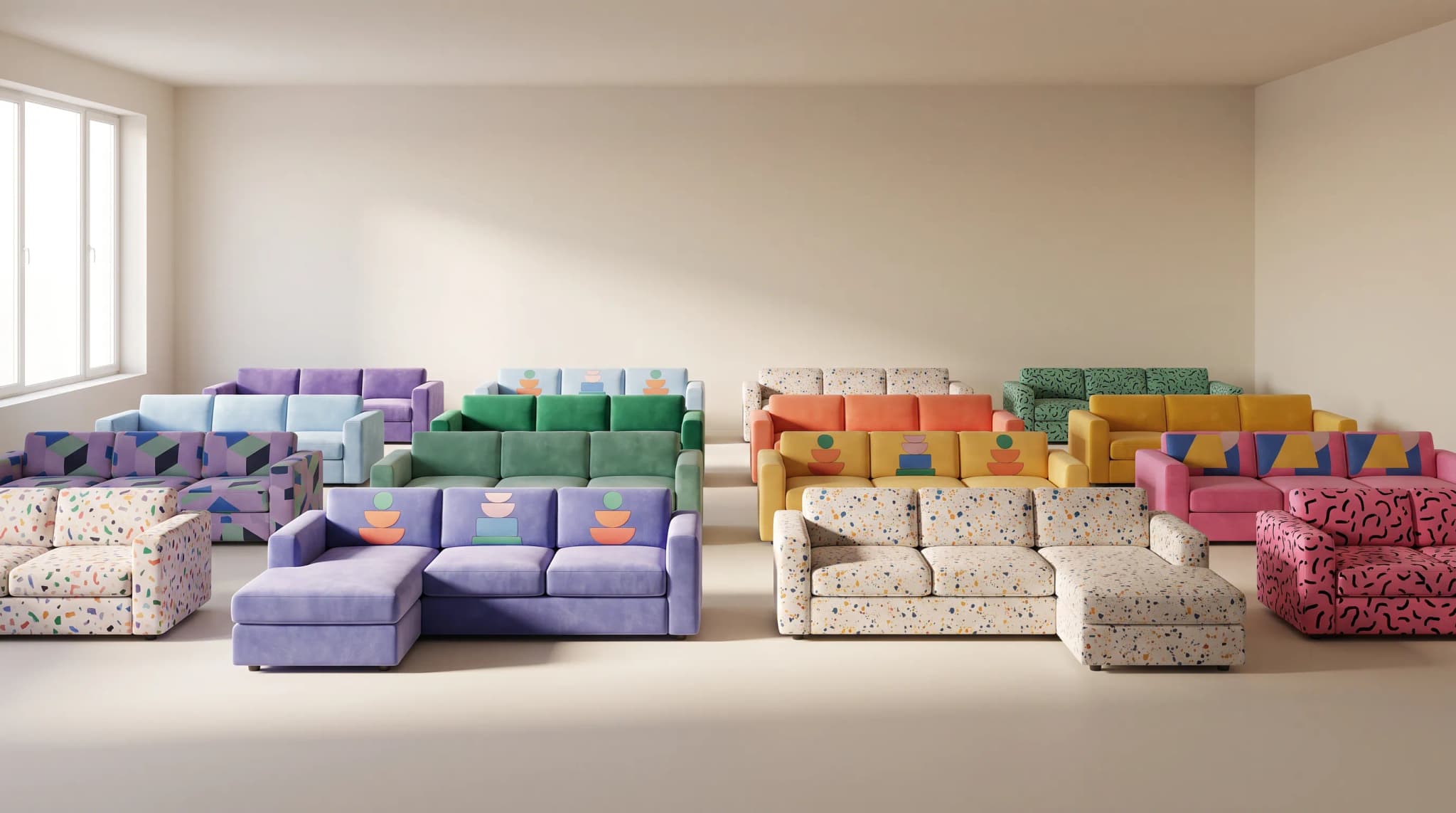
Every quarter, another furniture retailer sends out an RFP asking which virtual photography studio produces the most "showroom-quality" renders. It's the wrong question. Showroom quality on a single hero image is solved — has been for years. The problem nobody is buying for is consistency across two thousand SKUs, six channels, and four merchandising refreshes a year. That is a workflow problem, and it is the question platforms like Furniture Connect were built to answer.
The wrong question: 'who has the best showroom-quality renders?'
Walk into any procurement conversation about virtual furniture photography and the brief sounds the same. Show us your portfolio. Show us a hero shot of a sectional in a Scandinavian living room. Show us the lighting on the velvet. Show us the chrome reflections. The shortlist is then ranked by who produced the prettiest single image.
This is procurement theatre. Every credible render house and CGI studio in the category can produce a single beautiful image. The technology floor has been raised by physically-based rendering, AI-assisted upscaling, and a decade of trained 3D artists. If you take a top-tier single-asset CGI studio and a hero-shot specialist and put their best work side by side, an art director can argue preferences but a shopper cannot tell the difference. According to Baymard Institute's e-commerce UX research, users care about whether the image answers their decision-making questions — material, scale, configuration — not whether it won a 3D awards show.
So when a retailer picks a vendor based on hero-shot quality, they are optimizing for the wrong constraint. The constraint that breaks online furniture merchandising is not "can you make one beautiful image". It is "can you make four thousand consistent images, refresh them when we add a new fabric option, and deliver them into our PIM and onto our PDPs without quality drift". That is a different question, and almost nobody in the category is being asked it.
Why hero-shot quality doesn't scale to a catalog
Single-asset CGI studios are organized around the hero shot. A senior artist owns the scene. Lighting is hand-built. Materials are tuned per frame. Output is gorgeous, and it costs $300 to $1,500 per finished image.
This model breaks the moment a retailer asks for the same quality across a full collection. Four reasons:
- Artist-by-artist drift. Two artists rendering the same sofa in different fabrics produce subtly different lighting, camera height, and rim light. The catalog page looks uneven even when each image is technically excellent.
- Revision cost compounds. A 5% revision rate on a hero shot is trivial. The same rate on 2,000 SKUs is 100 reworks per refresh cycle.
- Channel adaptation is manual. A hero shot delivered as a 4K PNG gets reformatted by hand for PDP crops, category grids, mobile feeds, and marketplace exports.
- Quality regresses under deadline. When a Q4 refresh hits a single-artist studio, junior artists get the long tail. The hero looks great. The other 1,900 SKUs do not.
This is not a critique of CGI studios — they are excellent at what they were built for, which is the hero shot. It is a critique of using them for catalog-grade work, which is a fundamentally different operations problem. McKinsey's research on omnichannel retail consistently shows that consistency across touchpoints, not peak image quality, is what drives conversion lift.
What 'showroom-quality' actually means at retail scale
A physical showroom does not have one perfect sofa. It has fifty good ones, lit consistently, merchandised in coherent vignettes, refreshed every season, and matched to swatch books that actually correspond to what is on the floor. The showroom feeling is a system, not a hero piece.
Translating that to digital, "showroom-quality" at retail scale means six things:
| Quality criterion | What it actually means |
|---|---|
| Material accuracy | The fabric on screen matches the swatch the shopper will receive, across every colorway. |
| Lighting consistency | A side chair and a sectional from the same collection look like they live in the same room. |
| Scale truthfulness | A 3-seater reads as a 3-seater, not as a love seat in a wide-angle lens. |
| Configurable variants | Modular sofas, fabric options, and finishes render without re-shooting. |
| Channel-correct delivery | Image specs match each surface — PDP, category, marketplace, social, print. |
| Refreshability | A merchandising swap doesn't trigger a six-week production cycle. |
None of these are vendor capabilities. They are workflow capabilities. You can hire the best single-asset studio in the world and still fail every one of them if your workflow is "send brief, receive PNG, upload to PIM".
The three workflow capabilities that determine output quality
If catalog-grade output is a workflow problem, what does the workflow have to do? Three things, in order of impact.
Brand-consistent prompt and asset governance
The number one cause of inconsistency in virtual furniture imagery is not artist skill. It is brief drift. The lighting reference attached to job 41 is not the same as the one attached to job 312. The camera height was specified in feet in March and in centimetres in June. The fabric reference came from the supplier in one batch and from a swatch scan in the next.
A workflow-led platform fixes this by storing lighting setups, camera specs, room references, fabric assets, and brand rules as governed objects rather than as PDF briefs. Every new render inherits the canonical setup unless explicitly overridden. This is how platforms that use a mix of underlying AI models with intelligent routing — Furniture Connect being the clearest example in this category — produce visually consistent catalogs across thousands of SKUs without an art director having to manually QA every frame.
The test is simple: can someone two years from now produce a new colorway of the same sofa and have it match the original render without a phone call? In most studio workflows the answer is no. In a governed platform workflow it should be yes.
Iterative refinement without re-generation
The second workflow capability is the ability to fix what is almost right without throwing the image away. Traditional render pipelines and most AI-only tools share the same failure mode: when a stakeholder says "the cushion is a bit too plump" or "the rug is slightly too red", the only option is to re-render or re-generate from scratch, which produces a different image entirely. The merchandiser then has to decide whether to accept a different image or pay for another revision cycle.
A workflow built for catalog use lets editors refine in place — recolour a material, swap a cushion, adjust scene exposure — without regenerating. This is the difference between a studio workflow that scales and one that quietly bleeds revision hours. It is also why the comparison between AI-generated and traditional photography is increasingly a question of refinement tooling, not raw image quality.
Refinement matters more than people think because most of the perceived "quality gap" between virtual and photographic imagery is actually a revision gap. Photographers can move a cushion on set. Most virtual workflows cannot, so the final image has compromises baked in.
PIM/DAM integration that preserves quality across channels
The third capability is the one procurement teams forget about until it is too late. The render is delivered. Where does it go?
If the answer is "an artist emails a folder of PNGs to the e-commerce team, who upload them to Shopify and resize manually", quality dies in the last mile. Compression artefacts. Wrong crops. Inconsistent file naming. Mobile thumbnails that don't match desktop hero images. Marketplace exports that lose the alpha channel.
A workflow that produces showroom-quality output on the PDP has to treat PIM and DAM as part of the image pipeline, not as a separate destination. Variants are stored as linked objects. Channel renditions are generated deterministically. When the source asset is updated, every downstream channel inherits the change. Shopify Plus's enterprise guidance and BigCommerce's documentation on multi-channel commerce both highlight the same point: image governance is what separates retailers who launch a new colorway in a day from those who take three weeks.
The integration tests in the AI image-platform evaluation checklist help you check whether that quality survives export to your sales channels.
Why catalog-grade workflow beats one-off hero shots for online retailers
For an online retailer with more than a few hundred SKUs, the marginal value of a slightly more beautiful hero shot is small. The marginal value of consistency, refreshability, and channel-correct delivery is large.
A savings calculator on photography spend will show that the dominant cost in furniture imagery is not the hero shot — it is the long tail. The fifteenth fabric option. The Q3 catalog refresh. The category-page rendition. The marketplace export. Each is cheap in isolation and ruinous in aggregate when your workflow requires a brief, a quote, and an artist for every one.
Statista's data on e-commerce conversion and Furniture Today's industry coverage both point to the same retailer behavior: product detail page completeness — every variant, every angle, every channel — outperforms hero-shot polish at the funnel level. A shopper who can see the fabric they want on the configuration they want converts better than one who sees a stunning render of a different option.
This is why the anatomy of a high-converting product listing is increasingly about coverage and consistency, not about the single best image on the page. And it is why the guide to perspective change — being able to re-shoot the same product from new angles without a new production cycle — matters more than the quality of the original frame.
How to know if your current workflow is producing showroom-quality output
Forget the vendor. Audit the workflow. If you can answer yes to all of the following, you have a showroom-quality workflow regardless of who produces the images. If you can't, no amount of vendor switching will fix it.
| Workflow checkpoint | Yes / No |
|---|---|
| Can we add a new fabric colorway to an existing sofa without commissioning a new shoot? | |
| Does every image in a collection share the same lighting, camera height, and post-processing? | |
| Can a merchandiser refine a render in place without regenerating it from scratch? | |
| Are source assets, variants, and channel renditions linked in our PIM/DAM rather than copied? | |
| Can we deliver PDP, category, marketplace, and social renditions from a single source without manual rework? | |
| Does an image update propagate to every downstream channel automatically? | |
| Can we audit when a render was last refreshed and by whom? | |
| Do we know our cost per finished SKU image, not just per hero shot? |
A typical retailer using stitched-together studios and freelancers gets three or four yeses. A retailer on an integrated workflow platform gets all eight. The difference shows up in time-to-launch on new collections, in revision cycle counts, and most visibly in the uncanny valley problem — which is almost always a symptom of workflow gaps, not artist skill.
What this means for procurement decisions
If you are running an RFP for virtual furniture photography right now, the framing of your brief is doing more damage than your shortlist. Three changes will improve outcomes more than any vendor swap.
First, stop ranking on hero shots. Ask for a worked example of the same product rendered in five colorways, three room contexts, and four channel formats — all from a single brief. The studios optimized for hero work will struggle to deliver this without escalating cost. The platforms optimized for catalog workflow will deliver it as their default.
Second, write the workflow capabilities into the contract. Lighting governance, refinement tooling, PIM/DAM integration, and rendition automation should be procurement criteria, not nice-to-haves. Google Search Central's product structured data guidance makes clear that image quality and consistency are now ranking signals as well as conversion signals, which gives the workflow argument a search-visibility lever.
Third, run the pricing and case study maths on cost per finished SKU image across a full refresh cycle, not per hero shot. The hero-shot price is the most visible and the least relevant. The all-in cost — variants, refreshes, channel renditions, revision cycles, rework — is what determines whether your imagery operation is profitable or quietly subsidised by the marketing budget.
A retailer who reframes the question this way will end up with a shorter shortlist, a clearer brief, and an honest answer to the question that actually matters: not "who makes the prettiest single image" but "whose workflow produces showroom-quality output across our entire catalog, every season, on every channel". That is the demo conversation worth having.
Frequently asked questions
What does showroom-quality mean for virtual furniture photography at catalog scale?
A physical showroom isn't one perfect sofa; it's 50 good ones lit consistently and refreshed each season. Digitally that means six things: fabric on screen matching the swatch across every colorway, lighting consistency so a side chair and a sectional from one collection look like they share a room, truthful scale, configurable variants rendered without re-shooting, image specs that match each channel, and refreshes that don't trigger a six-week production cycle. None of these are vendor capabilities. They're workflow capabilities.
Why don't hero-shot CGI studios scale to a full furniture catalog?
Single-asset studios are organized around the hero shot: a senior artist hand-builds lighting and tunes materials per frame at $300 to $1,500 per finished image. Across a collection that breaks four ways. Different artists drift on lighting and camera height, so the catalog page looks uneven. A five percent revision rate becomes 100 reworks on 2,000 SKUs. Channel crops are reformatted by hand. And under a Q4 deadline, junior artists get the long tail, so 1,900 SKUs don't match the hero.
What causes inconsistency in virtual furniture imagery?
Brief drift, not artist skill. The lighting reference attached to job 41 isn't the one attached to job 312; camera height was specified in feet in March and centimeters in June; the fabric reference came from a supplier in one batch and a swatch scan in the next. The fix is storing lighting setups, camera specs, room references, fabric assets and brand rules as governed objects rather than PDF briefs, so every new render inherits the canonical setup unless someone explicitly overrides it.
How can we tell if our virtual photography workflow is producing showroom-quality output?
Audit the workflow, not the vendor. Can you add a fabric colorway to an existing sofa without a new shoot? Does every image in a collection share lighting, camera height and post-processing? Can a merchandiser refine a render in place without regenerating it? Are source assets, variants and channel renditions linked in your PIM and DAM rather than copied? Does an update propagate to every channel automatically? Do you know your cost per finished SKU image? Stitched-together studios usually manage three or four yeses; an integrated platform gets all eight.