Why Furniture Sales Teams Lose Hours Building Quotes and Presentations
Furniture quotes and sales presentations slow down when prices, configurations, specifications and images live in different places, and every rep rebuilds them. Where the hours go, and what furniture quotation software should fix.
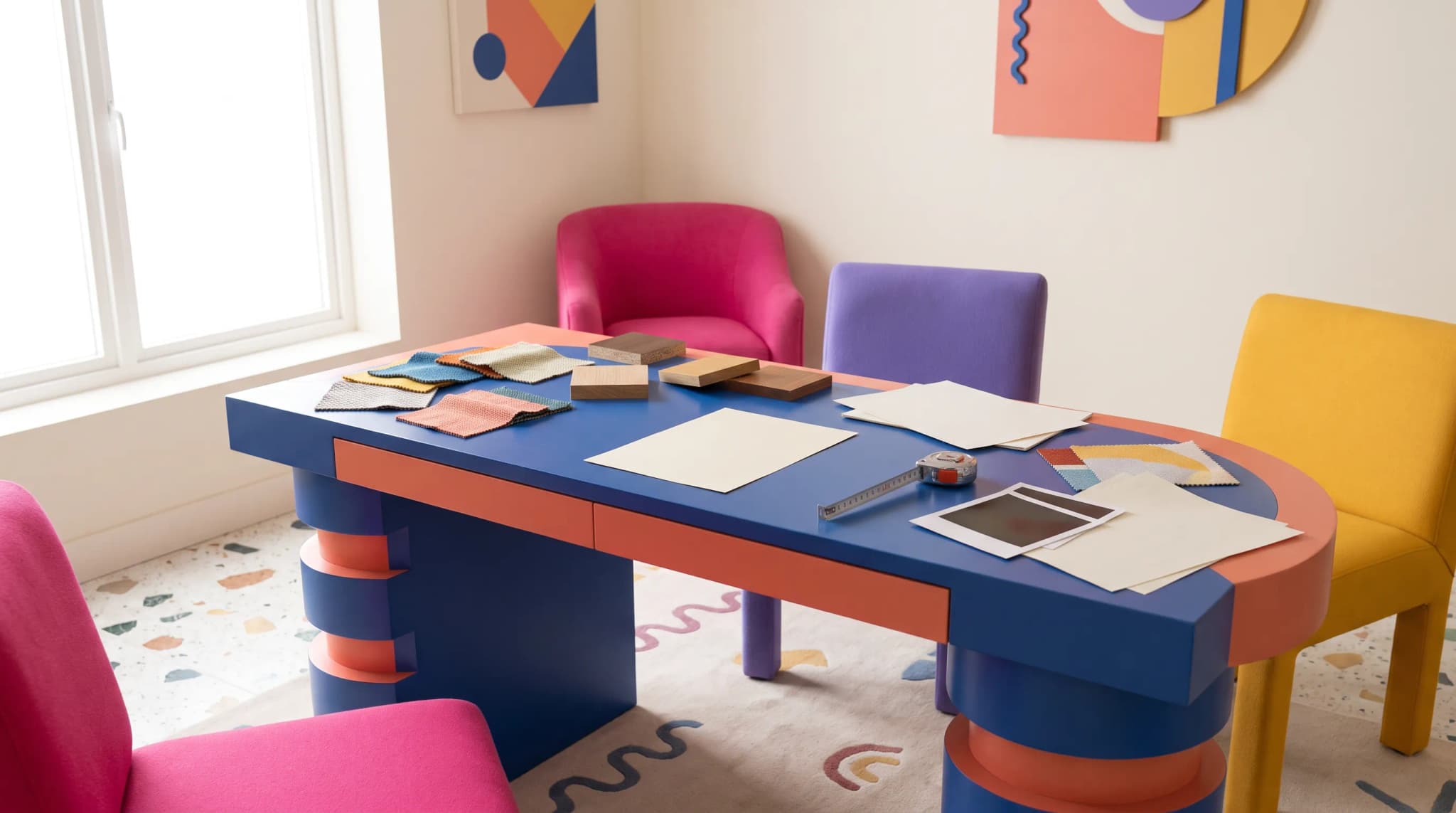
A dealer asks for a price on 40 lounge chairs in a contract fabric, with a brushed-brass base, for a hotel bar. The rep knows the right chair in seconds. The quote goes out on Thursday.
Between the request and the PDF, someone checked which price list is current, asked product whether the brass base is still offered, asked technical whether the fabric passes the right fire test, and searched three folders for a photo that shows that chair in that cover. Then the dealer asked to see it in walnut.
That's why a salesperson can know exactly what to recommend and still need days to send a complete proposal. They aren't writing one document. They're retrieving and checking product content from several places.
Why do furniture sales teams spend so much time assembling quotations, specifications and presentations?
Furniture sales teams spend so much time on quotations, specifications and presentations because each line depends on product facts that are owned by different people and stored in different files. A trade furniture quote may need, for every line:
- The product and sellable SKU
- Size, orientation, finish and cover
- Price at the correct grade and quantity
- Lead time for that configuration
- Dimensions and warranty information
- An image of the selected version
- Care, assembly or compliance documents
None of those is hard to find once. The hours come from finding each of them, for each line, and then checking them again when the customer changes something.
Where the hours go in one quote
| Task | Usually owned by | Why it waits |
|---|---|---|
| Confirm the current price and grade | Finance or commercial | Several price lists are in circulation, and the newest isn't obvious |
| Confirm the finish and cover are still offered | Product | Discontinued options stay selectable in old files |
| Find the lead time for that configuration | Operations | Lead times change by cover and finish, not by range |
| Find an image of the selected version | Marketing | Folders are organized by shoot, not by SKU and colorway |
| Rewrite the supplier description | Sales | Factory notes aren't customer copy, and rewrites stay in one document |
| Re-check everything after a change | Everyone again | One swap moves price, lead time, compliance and image together |
Each question is small. The elapsed time comes from the queues between them. The buyer's side of that queue is covered in why trade buyers wait days for specifications.
Matching an image to the selection
A folder containing 12 photographs of a chair is not 12 usable assets. Someone still has to establish which SKU and colorway each image shows, which is the job asset metadata does once.
If the client selected a brushed-brass leg and a particular wool, the nearest-looking photograph isn't good enough. The image has to show the combination, or be clearly marked as illustrative.
Checking everything again after a change
A client swaps the frame or chooses another cover, and price, lead time, compliance and imagery may all change with it. Configurable furniture makes a small amendment travel through the whole quotation line.
Why does every sales rep build proposals differently?
Every rep builds proposals differently because each one ends up assembling a private working version of the catalog. If getting an image means emailing marketing and waiting, a capable salesperson keeps a folder. If the approved description reads like a factory note, they rewrite it and keep the better version.
Each shortcut helps the next proposal go out. Over time, though, the business has several private catalogs, and none of them updates when a price, fabric or brand asset changes. Two reps quoting the same range in the same week can send documents that look as if they came from different companies: different product names, an image showing another finish, prices on different bases, terms copied from a two-year-old proposal.
That isn't a training failure. Asking reps to stop using their folders won't work while the private route stays faster than the official one.
Standardize the facts, not the selling
The fix isn't to lock every proposal into one fixed narrative. A useful rule:
If two salespeople quoting the same specification could disagree on a fact, control that fact centrally. If they could make different arguments from the same facts, leave room for judgment.
| Control centrally | Leave to the rep |
|---|---|
| Product names, SKUs, dimensions, materials and finishes | The recommendation for this project |
| Approved images and documents, linked to the version they show | The order of the story: durability first, or lead time first |
| Price basis, delivery terms, warranty and conditions of sale | Alternatives and trade-offs when the first choice isn't possible |
| Logos, typography and reusable page elements | Customer-specific language |
Whether the chair is 840mm high, whether the selected wool is still available and which terms apply shouldn't vary by salesperson. How the rep argues for it should.
How does the contract furniture sales process add to the work?
The contract furniture sales process adds specifiers, compliance evidence and project-specific documents to every quote. A residential quote answers "what does it cost and when does it arrive?". A contract quote, for a hotel, office or care home, also has to answer "is it suitable for this setting, and can you prove it?"
That usually means:
- Compliance by end use. In the UK, BS 7176 sets ignition-resistance requirements for upholstered seating in non-domestic settings according to the hazard level of the environment. In the US, ANSI/BIFMA X5.1 sets the tests and minimum levels for the safety, durability and structural adequacy of general-purpose office chairs. "Is this fabric suitable?" can't always be answered from the fabric name; the cover, filling and setting matter.
- Customer's own material. COM and COL orders change price, lead time and the evidence the specifier needs.
- Written specifications and terms. Commercial Interiors UK's code of practice asks members to give customers accurate written specifications and terms of purchase with quotations.
- Line sheets and customer-specific presentations. Dealers want a sheet for the range; a specifier wants a presentation for this project, with only the pieces, finishes and room context that matter to it.
Each of those documents draws on the same product facts. When the facts live in five places, every document is assembled by hand.
What are the options for furniture quotation software?
Furniture quotation software falls into three broad approaches, and the right one depends on how configurable the range is and where the product data lives.
| Approach | What it does well | Where the time still goes |
|---|---|---|
| Spreadsheet and document templates (Excel, Word, InDesign, Google Docs) | Familiar, flexible, full control of the layout | Every price, option and image is looked up and pasted by hand, and copies drift |
| 3D configurator and visual CPQ, such as VividWorks | Real-time 3D configuration, pricing and quotes, AR and room planning; integrations with Shopify, Magento, WooCommerce, ERP and CRM systems (VividWorks) | Built on optimized 3D models of each product (VividWorks creates or converts them), so it suits modular, made-to-order lines that justify that setup |
| Catalog-connected quotes, such as Furniture Connect | Lines drawn from the product catalog per sellable variant, with price and image; PDF, XLSX and presentation outputs | Only as current as the catalog behind it; complex project proposals may still live in an existing document tool |
These aren't mutually exclusive. A manufacturer with a modular office system may run a configurator on its website and still need quotes and presentations built from catalog data for its dealers.
How Furniture Connect builds quotes and presentations from catalog data
Furniture Connect starts from the product record rather than the document. The Agentic Catalog holds structured product, variant, material and pricing information, and the DAM keeps images and documents attached to the SKU and variant they show. Quotes then draw on those records:
- Lines come from the catalog. Product search returns one row per sellable variant, with its price, image and stock. Free-form lines are still allowed for one-off items.
- A line sells one variant. When the Agent builds a quote and a product comes in more than one variant, it won't add the line until a specific variant is chosen, and it lists the options. It also won't invent a price: the price comes from the catalog or from the user. In the app, a variant picker does the same job.
- Customer documents in several forms. Downloadable PDF quotes come in three layouts (standard, a glossy layout with per-item prices, and a glossy layout with one bundled pack price). The XLSX cost sheet has a customer version and an internal version with cost, margin and supplier columns.
- Presentation decks alongside the quote. Decks export as PowerPoint files that open in PowerPoint, Keynote and Google Slides. Decks, PDFs and Google Slides links can be attached to a quote.
- Lifestyle scenes for the proposal. A scene can combine up to 14 quoted products in one room, and you choose whether it becomes a page in the quote or its cover image. Saving a generated image back to a catalog variant is a separate choice; an explicit request to attach it counts as that choice, and the agent's catalog permission can be set to ask first.
- Branding on both sides. Seller branding is shared across quotes, and a client's logo can be added per quote, including from the client's website.
- ERP handoff where it exists. Teams using OrderWise can link a quote to an ERP customer and send it as a sales order. A person presses send; the Agent never does.
Human review still matters. The rep reviews the recommendation, the commercial terms and every generated image before anything reaches a customer. The difference is that they're reviewing, not reconstructing the product from old files.
How can reps present fabrics and finishes faster?
Reps present fabrics and finishes faster when they can show the configuration the customer is choosing, not the one on the showroom floor. Three things help:
- Fabric swaps from an approved hero. A fabric swap renders an approved product photo in another cover from a swatch or a library material, so the rep doesn't wait for a photograph that will never be taken. Check it against the physical swatch before it goes out.
- The customer's own room. The in-store sales app shows a piece in the customer's room, in the fabric or configuration they're considering, while they're still in the store.
- Scenes for the proposal. For contract and trade work, a lifestyle scene of the quoted pieces together often answers "how will it look?" before the specifier asks.
Whatever the image, linking it to an exact variant needs a person to confirm it. The nearest-looking photo isn't the same as the photo of the version being sold.
Does visualization lift conversion?
Visualization can lift conversion, but the honest answer is to measure it on your own range. FW Style, an online furniture retailer, reports sales conversions up 30% after replacing Presti.ai, Google Gemini and other generic tools with Furniture Connect for its product imagery. That is one customer's reported result, not a benchmark.
To test it properly, record a baseline, change the imagery on a comparable set of products or quotes, and compare like with like. The pilot guide lists the measures worth capturing.
What a quote-ready product record needs
Start with the product information people chase most often:
- A specific identity. The quote resolves to the sellable version, not only the parent range.
- Current commercial data. Price and lead time have an owner and a clear effective date.
- Structured options. Size, orientation, cover grade and finish are separate selections, not buried in a description.
- Connected assets. Images and documents stay linked to the products and variants they support.
- Approved proposal copy. The customer-facing description is written once and available for the next quote.
This doesn't replace commercial judgment. It removes the retrieval work that delays it. Start upstream with supplier catalog onboarding, so quotes draw on complete product and variant records.
Audit one recent quote
Take a recent multi-product quotation and trace every line backwards:
- Where did the price come from?
- Who confirmed the finish and lead time?
- Did the image show the selected version?
- Which documents had to be requested?
- What was checked again after the client made a change?
Then collect three recent proposals from different reps that share some products, and compare names, prices, images, specifications and terms. The private folders you find are a map of everything the official process made hard to reach. If old prices and withdrawn options are still selectable, read how stale product information stays active in quotations.
Frequently asked questions
Why do furniture quotes take so long?
The document is rarely the slow part. The time goes before it, while someone confirms which price list applies today, checks which finishes are still available, finds the right specification sheet and looks for an image of the exact version being quoted, often by asking three or four different teams. A rep can know exactly what to recommend and still need days, because they're retrieving and checking product content rather than writing.
How can reps present fabrics and finishes faster?
Give them imagery of the configuration the customer is choosing rather than the one on the showroom floor. A fabric swap renders an approved product photo in another cover from a swatch or a library material, and a lifestyle scene can place the quoted pieces in a room for the presentation. Each generated image should be checked against the physical swatch before it goes to a customer, and saving it to the catalog variant should stay a deliberate choice.
What should a quote include?
Each line should resolve to one sellable version: the SKU, size, orientation, cover and finish, the price at the correct grade and quantity, the lead time for that configuration, dimensions, warranty, and an image of the selected version. Contract and trade quotes often add care, assembly and compliance documents, and the quote as a whole should carry accurate written specifications and the current terms of sale.
Does visualization lift conversion?
It can, but measure it on your own range. FW Style, an online furniture retailer, reports sales conversions up 30% after switching its product imagery to Furniture Connect, and that is one customer's reported result rather than a benchmark. Record a baseline first, change one thing on a comparable set of products, and compare conversion on listings or quotes with and without the new imagery.
To see quotes built from your own catalog, book a demo of the Agentic Catalog and bring a recent quote you'd like to rebuild.
Sources
- BSI: BS 7176, resistance to ignition of upholstered furniture for non-domestic seating, the UK specification for contract upholstered seating by end-use hazard.
- BIFMA: ANSI/BIFMA X5.1 general-purpose office chair standard, the US test standard for safety, durability and structural adequacy of office chairs.
- Commercial Interiors UK: Members Code of Practice, on written specifications and terms with quotations.
- VividWorks: 3D product configurator, what the configurator and visual CPQ cover and the platforms it integrates with.
- VividWorks: 3D models guide and FAQs, how existing CAD files are optimized or new models created.