Why Growing a Furniture Assortment Creates More Than Product Work
New furniture models multiply into variants, images, documents and channel outputs. Learn how to calculate the content workload before committing to a larger range.
The buying plan says 20 new models. The content team sees hundreds of sellable versions, each needing data, imagery and somewhere to go.
Both counts are correct. They are measuring different units.
Assortment growth becomes difficult when the business plans in base products but the work happens at variant, asset and channel level.
The model is not the unit of content work
A product team develops a model. An ecommerce or catalog team has to represent every version a customer can choose.
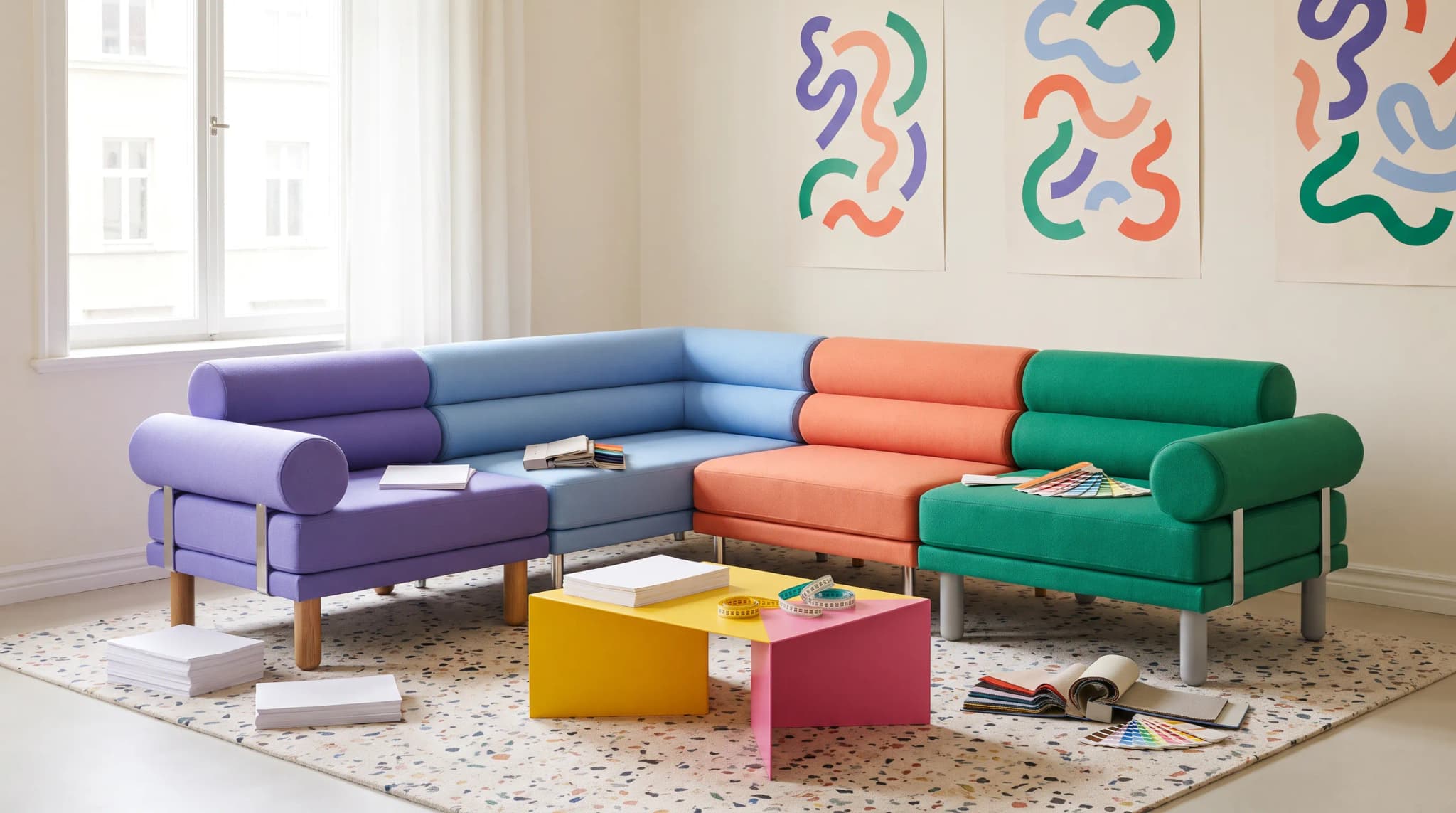
For a sofa, that may include sizes, orientations, cover grades, colorways, leg finishes and cushion options. Each sellable version may need a title, dimensions, price, availability, image, swatch and supporting documents.
Then the information has to fit the website, retailers, marketplaces, showrooms and sales proposals.
The workload follows this shape:
Products × variants × required content × destinations
Not every destination needs a separate copy of every asset. But each adds rules, fields or formats that somebody must prepare and maintain.
A simple example
Take an illustrative range expansion of 20 models, averaging 12 purchasable variants each.
That creates 240 sellable versions. If each needs a hero image, a colorway image, a dimension image and a specification sheet, the team has 960 core content items to create or connect before channel formatting begins.
These figures are an example, not a furniture benchmark.
If the new range carries more covers or configurations than the existing average, content work grows faster than the model count. That is why a 20% assortment increase can feel much larger to the teams preparing it.
The work continues after launch
The first content set is only the beginning.
A supplier changes a dimension. A mill withdraws a fabric. A price increase affects every variant using a material grade. A retailer adds a required field. Brand photography is refreshed. Miss one of those updates and the old value keeps turning up in quotes.
Each update has to reach the product records, assets and channel values that depend on it. The larger the catalog, the more damaging duplicated records become.
One fabric typed into 300 rows creates 300 places to check. One fabric record referenced by 300 variants creates one controlled update and 300 visible relationships.
Why more people only solve part of it
Extra capacity helps a backlog. It does not remove repeated work.
If every channel has its own product description, every person maintains a different version. If imagery sits in folders without product context, a larger team still has to identify the correct colorway by hand.
The useful question is not only “how many people do we need?” It is “how many times are we creating or checking the same fact?”
What scales more cleanly
Reusable product records
Hold the underlying product fact once, then create the destination value from it. Channel-specific copy can differ without becoming a disconnected second catalog.
Shared material records
Keep a fabric or finish as one record with its code, color, composition, swatch and properties. Products reference it instead of repeating it. The furniture product data model covers the materials layer in detail.
Explicit variant relationships
Destinations need to know which sellable items belong to the same product group. Google Merchant Center, for example, requires separate variant items to share an item group ID and provide the attributes that distinguish them.[1]
Assets tied to products and variants
Record what each image depicts, using something like the furniture asset metadata template. That makes missing colorway coverage countable and keeps the next export from becoming another folder search.
Reusable channel mappings
Map your product fields to the destination once, review the mapping and reuse it. Do not reshape the same range from scratch for every submission, however much every retailer wants a different format.
What leadership should measure
Replace the single “products added” figure with:
- Sellable variants added
- Variants complete enough for their intended channels
- Variants with approved imagery
- Existing products touched again after launch
- Work spent maintaining the current catalog versus launching new ranges
For how to measure that work against a baseline, see where AI is creating measurable value for furniture manufacturers.
The aim is not to make the catalog look large. It is to increase the share of the available range that can be shown, listed and sold without content work growing at the same rate.
Where Furniture Connect fits
The Furniture Connect catalog structures parent products, variants and reusable materials.[2] Formula columns calculate fields from other values, and content can be maintained by channel or language without overwriting the base.
Studio handles imagery beyond one product at a time. Teams can generate selected product-and-material combinations as a batch. DAM keeps those assets connected to the products they support.
Furniture Connect does not remove review or decide which combinations the business should sell. It changes the denominator the team can manage before duplicate data and missing imagery force part of the range out.
Calculate the expansion before approving it
For the next range plan, list the models, expected purchasable variants, minimum content per variant and intended destinations.
Put that total beside the base-model count. The difference is the work that needs an owner before the range is committed. To see what happens when it does not get one, read why businesses end up selling only part of the range.
Frequently asked questions
Why does adding 20 furniture models create so much more content work than expected?
Because the model isn't the unit of content work. A buying plan counts base products, but the catalog team has to represent every version a customer can choose: sizes, orientations, cover grades, colorways, leg finishes and cushion options. Each sellable version may need a title, dimensions, price, availability, image, swatch and documents, and then has to fit the website, retailers, marketplaces, showrooms and sales proposals. The workload is products times variants times required content times destinations.
How do I estimate the content workload of a furniture range expansion?
List the models, the expected purchasable variants per model, the minimum content each variant needs and the intended destinations, then multiply. As an illustration, 20 models averaging 12 variants gives 240 sellable versions; if each needs a hero image, a colorway image, a dimension image and a spec sheet, that's 960 core content items before any channel formatting. Put that total beside the base-model count so the difference has an owner before the range is committed.
Will hiring more catalog staff fix the problem?
Extra capacity clears a backlog but doesn't remove repeated work. If every channel has its own description, each person maintains a different version. If imagery sits in folders without product context, a bigger team still identifies the right colorway by hand. The better question is how many times you're creating or checking the same fact. One fabric typed into 300 rows is 300 places to check; one fabric record referenced by 300 variants is one controlled update.
What catalog structure scales best as a furniture assortment grows?
Hold each product fact once and derive channel values from it. Keep fabrics and finishes as shared material records that products reference rather than repeat. Make variant relationships explicit, since destinations such as Google Merchant Center need to know which items belong to the same group. Record what every image depicts so missing colorway coverage is countable. Map your fields to each destination once, review the mapping and reuse it.