The Facts You Know About Your Products That Aren't Written Anywhere an AI Can Read
Your buyers and customer service know whether the legs come off and how deep the seat is. The product record doesn't. How to find that knowledge and give it a slot.
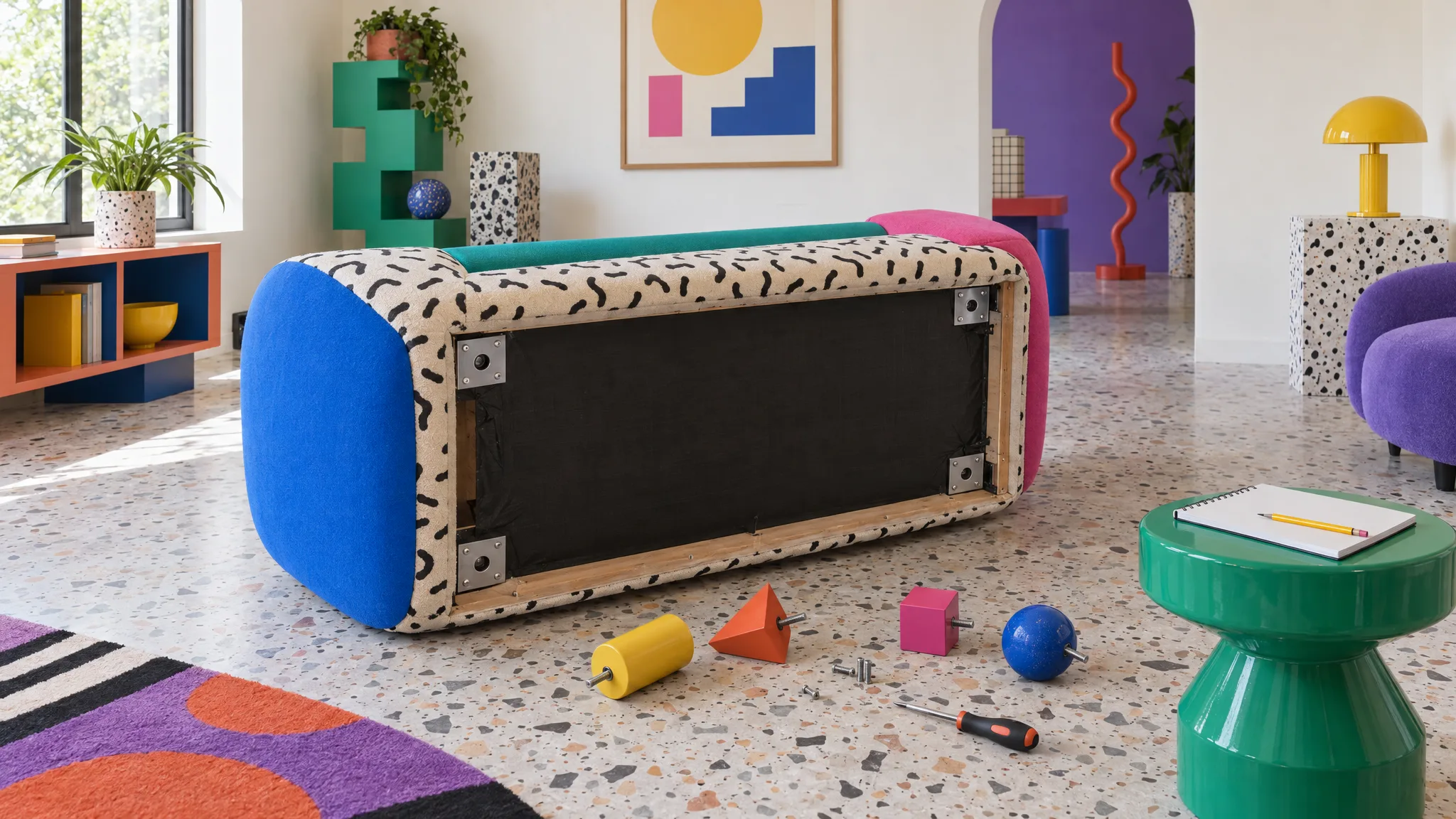
Ask your customer service team what shoppers ask about sofas. They'll tell you without looking anything up: will it fit through my door, do the legs come off, how deep is the seat really, will the fabric survive a dog, is the gray actually gray or is it blue, how heavy is it, can I get just the chaise.
Now open the product page for your best-selling sofa and look for those answers. Some may not be there. The business knows. The page doesn't. And an AI assistant working from the page has what the page gives it.
Where the knowledge actually lives
Furniture product knowledge often sits in several places, and not all of them are available to a machine reading the product page.
Customer service. The ticket history and the team's heads. The most accurate and most shopper-shaped source you have, because it's literally the questions shoppers asked and the answers that satisfied them.
Store staff, if you have stores. They know which pieces sit firm and which sink, which fabric pills, which finish shows fingerprints.
Buyers and merchandisers. They've seen the supplier spec sheet, visited the factory, know the frame construction and the foam density, and know which claims the supplier makes that you'd rather not repeat.
Reviews. Shoppers writing down what they learned after buying: "fits through a 30-inch door with the legs off", "seat is deeper than it looks, great if you're tall".
The product record. Name, price, a description, some dimensions, images. Often the thinnest of the five.
The product record is the place to consolidate verified facts for consistent publication.
Why it never gets written down
Nobody's job is to move it. Customer service is measured on resolved tickets, not on attributes added. Buyers hand over a spec sheet and move on to the next range. Store staff aren't near the catalog. The product page is built once, from the supplier's data, by someone who hasn't talked to a customer about that sofa.
And the record has nowhere to put it. If the relevant family includes width, depth and height but not "legs removable", "packed dimensions with legs off", "seat depth" or "fabric cleaning code", the knowledge has no slot, so it stays in the ticket queue.
Why it matters now
It always mattered; a page that answers the shopper's question converts better than one that makes them email. What's new is the reader that can't email. An AI assistant asked "which of these fits through a 30-inch door" works from what's written. Your sofa does fit, with the legs off, and your team has said so a hundred times. The page doesn't say it, so the assistant can't say it either, and your sofa is less likely to be in the answer.
A competitor whose page says "Legs unscrew for delivery; packed height 26 inches with legs removed" has given the assistant something to work with. That isn't the whole reason they're recommended, but it's a reason you can act on.
How to find it in your own business
Pull the questions. Export a few months of product-related customer service tickets, or just ask the team to list the twenty things they're asked most. Sort by product category. You'll get a short list per category: for sofas, probably clearance, seat depth, leg removal, fabric durability and cleaning, weight, cushion construction, color accuracy, delivery handling.
Read the reviews for facts. Skim reviews on your top products for sentences that state something about the product rather than the experience. Those are facts shoppers wanted and had to discover for themselves. Verify them before they become specifications: one customer's door is not your minimum clearance, and "survived our dog" is not a durability rating.
Ask the buyer for the spec sheet. The supplier's full specification usually has frame construction, foam density, fabric composition and test results that never made it past the buyer's inbox.
Put the three lists together and you have the attributes to create and add to the relevant family. For sofas it's rarely more than ten or fifteen.
Getting it onto the record
This is the part that turns knowledge into something a page and a feed can carry.
Create the attributes and add them to the relevant family: seat depth, leg removable (yes/no), packed dimensions with legs removed, fabric composition, the supplier's cleaning code, cushion fill, frame construction, weight and boxed dimensions. Then fill them. Some come from the supplier spec. Some come from customer service's answers, verified. Some you measure once in the warehouse.
Once they're on the record, and once the template and feed mappings read them, the page can show them in a specifications table and an FAQ, the feed can carry them as fields, and structured data can include them. The knowledge your team has been giving away one ticket at a time becomes something every reader can get at once, including the assistants answering shoppers' questions.
For how facts hide on a page even when they're nominally there, see where furniture product data hides. For why this has to be done at the record rather than page by page, see why fixing one product page doesn't fix the range. The whole argument is in being found by AI.
This week
Ask customer service for their top ten sofa questions. For each, check whether the answer is an attribute on the product record. The ones that aren't are the facts your business knows and your products don't.