Furniture Catalog Software in 2026: What Retailers, Stores and Showrooms Actually Need
'Furniture catalog software' means three different products — POS-led systems like STORIS, PIM platforms like Akeneo and Plytix, and showroom catalog tools. This guide untangles the categories and matches each to the retailers, stores and showrooms they fit.
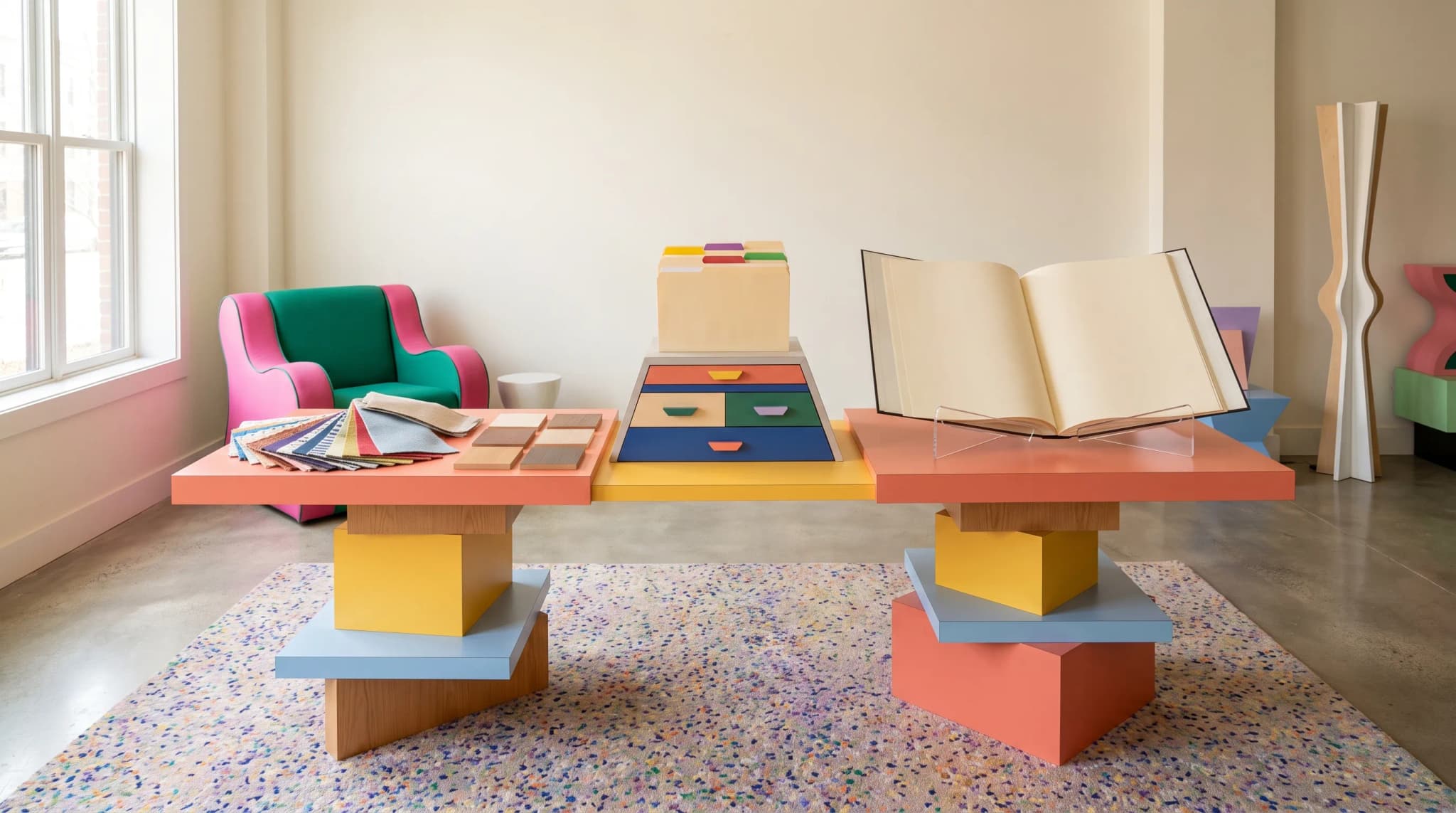
Walk into most furniture retailers and the "catalog" is really four things wearing one name: the point-of-sale system that knows the price, a spreadsheet that knows the specs, an image folder that knows what the product looks like, and a printed or tablet lookbook the showroom staff actually show customers. When those four disagree — and they do — a customer gets quoted the wrong price on a discontinued colorway.
So when businesses search for "furniture catalog software," they're rarely comparing like with like. The vendors that come up — STORIS, Shopify, Akeneo, Plytix, Wondersign, Furniture Wizard — solve different problems and mostly don't compete with each other. This guide sorts the category out and matches each type of software to the businesses it fits.
The three kinds of furniture catalog software
Operations-led systems — STORIS, Furniture Wizard, Lightspeed Retail, plus general platforms like Odoo and NetSuite. These are POS, inventory and ERP tools where the catalog exists to serve transactions. They know stock levels and margins cold. They're weak on rich product content: materials, lifestyle imagery, channel-ready copy.
Content-led systems — product information management (PIM) platforms like Akeneo, Salsify and Plytix. These treat the catalog as structured product data to be enriched and published everywhere. Strong on attributes and syndication; imagery still has to be created somewhere else, and none are furniture-specific. Our furniture PIM buyer's guide compares them in depth.
Presentation-led systems — showroom and digital catalog tools like Wondersign, kiosk apps and PDF lookbook builders. These make the catalog browsable in-store or in a sales meeting. They're only as good as the product data and imagery feeding them; our guide to AI furniture images for showroom catalogs covers the imagery side.
The honest answer to "which is best" is that most furniture retailers end up needing all three jobs done — the mistake is buying three disconnected tools and re-keying products between them.
What's the best furniture catalog software for furniture retailers?
Start from where your catalog data is worst, not from feature lists. (For a vendor-by-vendor breakdown — STORIS, Wondersign, LogicTrade, WizCommerce and the PIMs — see the retailer comparison.)
If your pain is transactional — stock accuracy, special orders, delivery scheduling — an operations system like STORIS is the category standard for larger furniture retailers, and Lightspeed or Odoo serve smaller ones. But be clear-eyed: these systems won't fix incomplete supplier specs or missing imagery, because that's not their job.
If your pain is product content — suppliers sending PDFs, spreadsheets with missing dimensions, the same fabric named three ways — the fix is a catalog built on structured product data. That's PIM territory (some vendors and buyers say product information system instead; our PIS vs PIM comparison explains the overlap). For furniture retailers specifically, the evaluation should include how the system ingests supplier spreadsheets (column mapping and SKU matching, so re-imports update rather than duplicate), how it handles variant explosions when one sideboard comes in five finishes, and whether it can enrich the gaps itself — AI drafting descriptions and standardizing attributes for the team to review, rather than leaving every blank cell as manual work.
And if your pain is that products have the data but still can't go live because there's no imagery — a common state: ready in the warehouse, not ready to sell — then the catalog tool needs to create images, not just store them. That's the gap Furniture Connect was built for: the catalog holds the product data, and the built-in studio generates product-accurate pack shots, colorway variants and room scenes from it, with every asset staying connected to its product. Retailers using this approach report getting products to market roughly 50% faster, because the launch no longer waits on a photoshoot.
Which furniture catalog software is best for stores and showrooms?
A showroom floor can only hold a fraction of the range. The catalog's job in-store is to sell the products that aren't physically there — the other 30 fabrics, the matching pieces, the sizes the floor can't fit.
That makes three things non-negotiable. First, the showroom catalog must read from the same source as the website and the POS, or staff end up quoting from stale printouts. Second, every variant needs imagery good enough to sell from a screen. A swatch chip next to a photo of a different colorway asks the customer to imagine the product — and customers don't buy what they have to imagine. Third, staff need to find products at conversation speed. Customers describe furniture visually — "like that one, but in green" — or arrive with a photo from Instagram. A catalog with product and image search lets a salesperson search with that photo and pull up the closest pieces in the range while the customer is still standing there.
Kiosk and signage tools like Wondersign handle the display layer well, especially for retailers selling catalog brands with ready-made feeds. The harder problem is retailers and brands with their own ranges, where nobody supplies the feed — you are the feed. There, the workflow that matters is: supplier data in, enriched once, imagery generated per variant, then pushed to web, showroom screens and sales tools from the same source. That's one connected catalog doing all three jobs rather than three tools disagreeing with each other.
What about furniture manufacturers building catalogs?
Manufacturers face the outbound version of the problem: the catalog is the product you hand to retailers, agents and contract clients. Trade tools like SuperCat have long served electronic catalogs for reps; general PIMs like Akeneo and Perfion handle attribute data at enterprise scale.
The furniture-specific gaps are the same ones retailers hit, plus one more: quoting. Contract and trade sales run on proposals assembled from catalog data — products, options, pricing, images. When the catalog system can build quotes and proposals directly — Furniture Connect uses AI to assemble them as visual PDFs, imagery included, straight from the catalog — a rep answers a brief in minutes with current data instead of copying specs into a document that's outdated before it's sent.
The breakdown of why furniture quotes take so long shows which product facts and assets need to be ready before a proposal can move.
A short evaluation checklist
Whatever category you're buying from, put these in the demo script:
- Import a real supplier spreadsheet — messy, with missing dimensions. What does the system do?
- Show one product in eight fabrics. How is it stored, priced and displayed?
- A new range has no photography. What happens inside the tool, and what has to happen outside it?
- Change a price once. Where does it update — web, showroom, quotes?
- What does the showroom or sales team actually see, and is it reading live data?
- Search the catalog with a photo of a sofa. Do the closest matches come back?
- Ask for a quote as a customer-ready PDF. How much of it is assembled automatically, and does the imagery come with it?
- Count the tools left in the workflow at the end. Every extra one is a place where the catalog can disagree with itself.
Frequently asked questions
What's the best furniture catalog software for furniture retailers?
Start from your worst pain, not from feature lists. If it's transactional — stock accuracy, special orders, delivery — STORIS is the category standard for larger retailers, with Lightspeed and Odoo serving smaller ones. If it's product content, a PIM fits. And if products have the data but can't go live for lack of imagery, Furniture Connect pairs the catalog with built-in AI imagery creation so launches stop waiting on photoshoots.
Which furniture catalog software is best for stores and showrooms?
The showroom catalog has to read from the same source as the website and POS, show every variant with imagery good enough to sell from a screen, and let staff search at conversation speed — including with a photo a customer brings in. Kiosk tools like Wondersign handle the display layer well for retailers selling catalog brands with ready-made feeds. Retailers and brands with their own ranges need a connected catalog that generates the feed itself.
What's the top furniture catalog software option for manufacturers?
Trade tools like SuperCat serve rep-facing electronic catalogs, and general PIMs like Akeneo and Perfion handle attribute data at enterprise scale. The furniture-specific gap is quoting: contract and trade sales run on proposals assembled from catalog data. Furniture Connect builds quotes as visual PDFs — products, options, pricing and imagery — straight from the catalog.
Do I need a PIM or a POS for my furniture catalog?
They do different jobs. A POS or ERP knows stock levels and margins; a PIM knows product content — attributes, materials, imagery, channel-ready copy. Most furniture retailers need both jobs done. The mistake is buying disconnected tools and re-keying products between them until the catalog disagrees with itself.
One catalog, doing more jobs
Furniture retail keeps adding surfaces — marketplaces, retail media, AI shopping assistants answering customers' product questions directly. Each one is an opportunity, and each one reads from your catalog. The businesses that do well won't be the ones with the most tools; they'll be the ones whose product data and imagery are complete enough to show up everywhere a customer looks.
That's a solvable problem with the products you already have. If your catalog is furniture, see how Furniture Connect handles the data, the imagery and the showroom from one place, or request a demo with your own range.