Google's Universal Commerce Protocol, Explained for Furniture Retailers
Google's Universal Commerce Protocol connects shopping agents with merchant systems. Learn what it covers, how it differs from ACP and what furniture data it needs.
Google's Universal Commerce Protocol, or UCP, gives shopping agents and merchants a shared way to handle product discovery, carts, checkout and post-purchase actions.[1]
For furniture retailers, the protocol is not a new product catalog. It is a route through which an agent can work with catalog and commerce systems. Whether it can find the right sofa still depends on the merchant holding the fabric, size, price, availability and imagery as usable product data.
What UCP does
UCP is an open protocol for agentic commerce. A merchant publishes a profile describing the services it supports. An agent can then discover those capabilities and agree on the parts of the transaction both sides can handle.[2]
The model is modular. Catalog discovery, cart, identity, checkout and order services do not all have to be adopted at once. The merchant remains the merchant of record and continues to own the customer relationship, policies and fulfillment.[1][3]
Support in the UCP specification does not mean every capability is available through Google today. Google's implementation has its own onboarding, supported features and rollout schedule. Its current integration page points merchants to a waitlist and describes several capabilities as upcoming.[3]
Google says UCP is compatible with other standards including MCP, A2A and AP2. MCP connects an assistant to tools and data; UCP describes commerce interactions between agents and merchants. They are related pieces, not competing names for the same thing.[1]
UCP and OpenAI's ACP are both commerce protocols
OpenAI and Stripe's Agentic Commerce Protocol, or ACP, also covers agent-led commerce. Current OpenAI documentation includes product discovery, merchant feeds, checkout, delegated payment and merchant-of-record responsibilities.[4][5]
UCP and ACP have different specifications and ecosystems, but a furniture retailer should not start by betting the catalog on one acronym. Both depend on accurate product identities, purchasable variants, prices, availability and images.
Why furniture is a difficult test
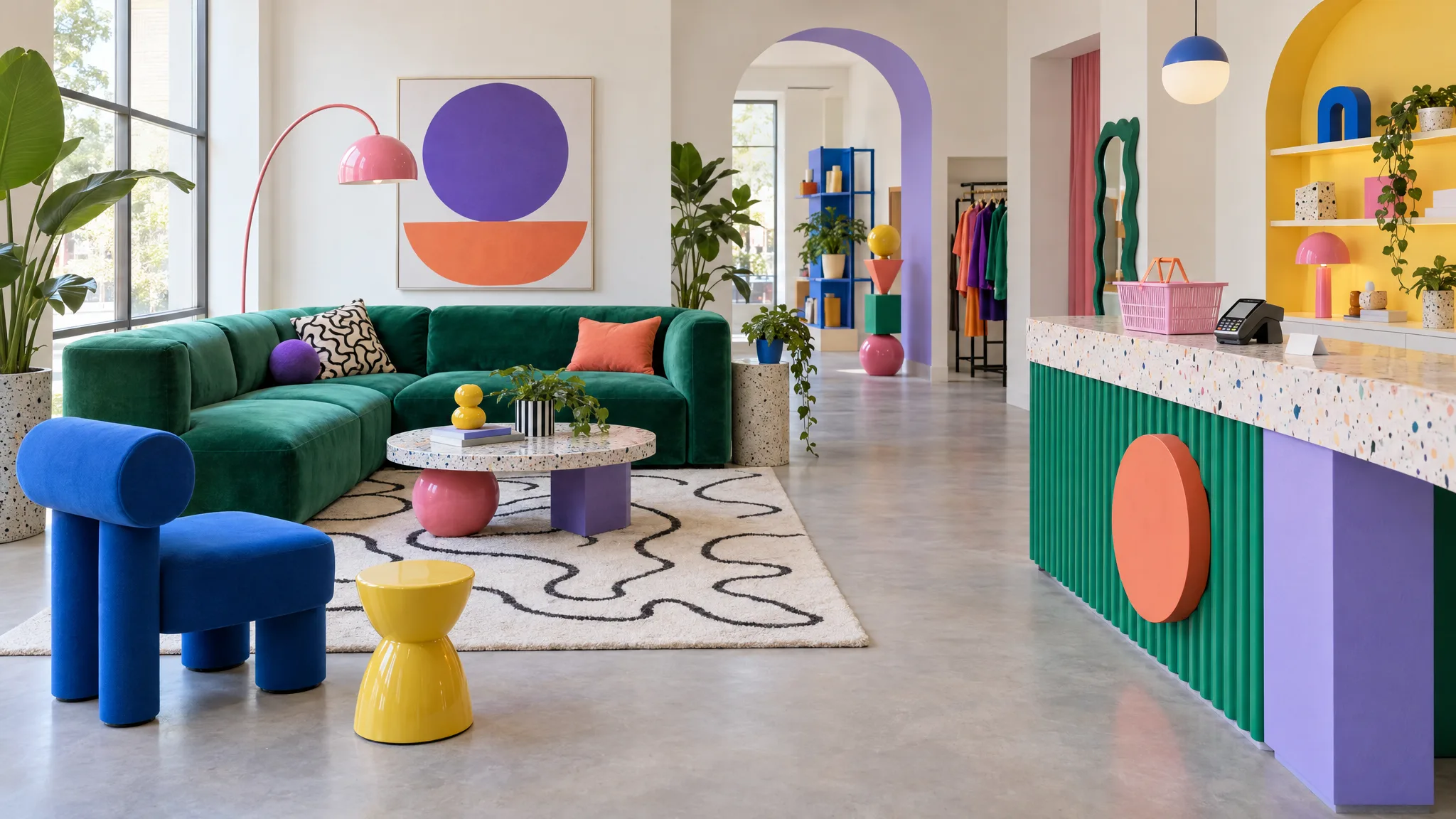
The phrase "green velvet corner sofa under 250 centimeters" contains several conditions:
- The corner configuration must exist.
- Green velvet must be valid for that configuration.
- The dimensions must belong to that version.
- Its current price and availability must be known.
- The image must show the version being offered.
A parent product with "available in many fabrics" in its description cannot answer those questions reliably. The protocol can carry a precise result only when the merchant systems can supply one.
Made-to-order and highly configured products may also require a longer path than a stocked item with a fixed SKU. Discovery can still be valuable even where the shopper must complete configuration or confirm lead time on the retailer's site.
What should a furniture retailer do now?
Start with the records shared by every route to market:
- Give every purchasable variant a stable identifier.
- Record dimensions with units at the level where they change.
- Keep price and availability current for that selling route.
- Connect each image to the product or variant it shows.
- Separate verified product facts from channel-specific copy.
Then assess each protocol or platform against the markets, checkout flows and product types you actually support. Google currently provides a UCP integration process and waitlist rather than a reason for every furniture retailer to rebuild immediately.[3]
Where Furniture Connect fits
Furniture Connect does not currently provide a direct UCP integration or publish products to Google Merchant Center. It can maintain the underlying furniture catalog: products, variants, materials, dimensions and media, with channel-specific values for supported fields.
Its Shopify integration synchronizes supported product content and can create Shopify draft products. Publishing remains a separate action. Preparing accurate records for a channel is not the same as completing that channel's approval or checkout integration.[6]
The commercial opportunity is broader than a buy button inside one assistant. When the catalog can answer a precise furniture question, more of the range can be discovered, compared and carried into the buying journey wherever that journey starts.
Sources
- Google: Universal Commerce Protocol announcement
- Universal Commerce Protocol: UCP core concepts
- Google for Developers: UCP integration overview
- OpenAI: Agentic Commerce Protocol key concepts
- OpenAI: Product feed specification
- Furniture Connect: Connecting the Agentic Catalog to sales channels and ERPs