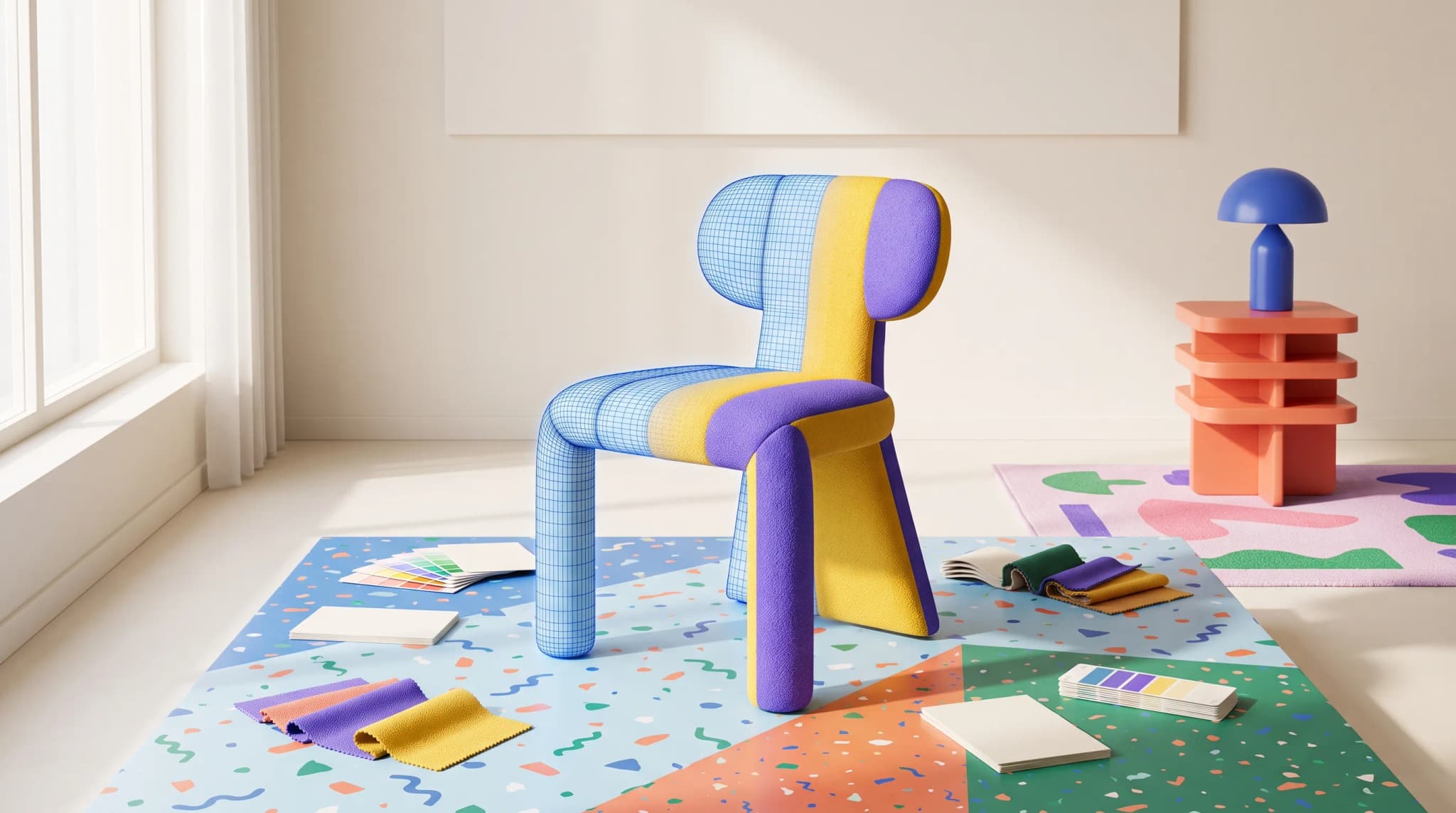
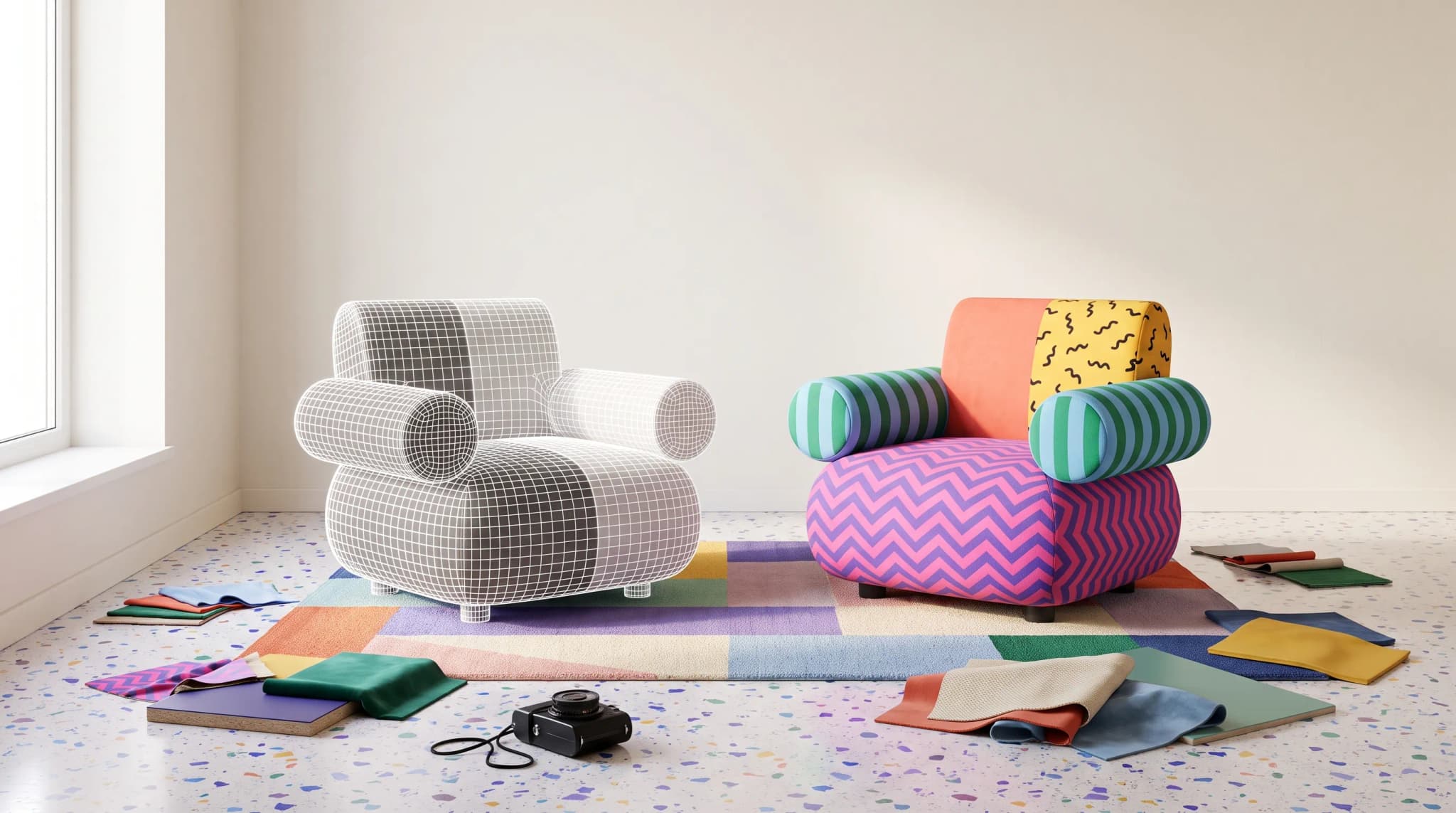
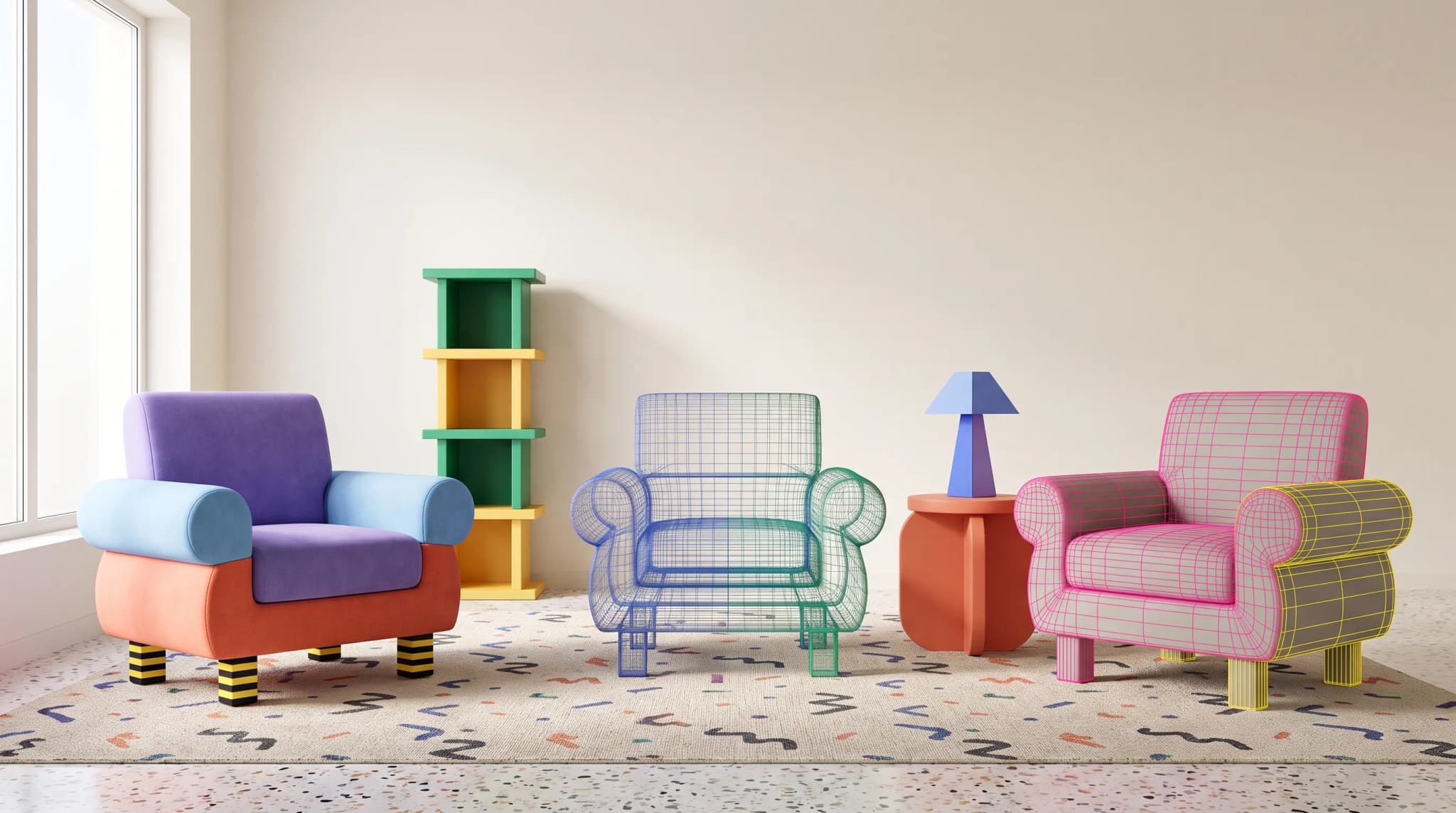
Which Furniture CGI Studio Has the Best 3D Renders for Catalogs? (2026)
The furniture CGI studios producing the strongest 3D catalog renders — Pikcells, Danthree Studio, CGIFurniture, OmegaRender and others — how to judge consistency at 400-image scale, and why the best catalog imagery is increasingly generated from the catalog itself.
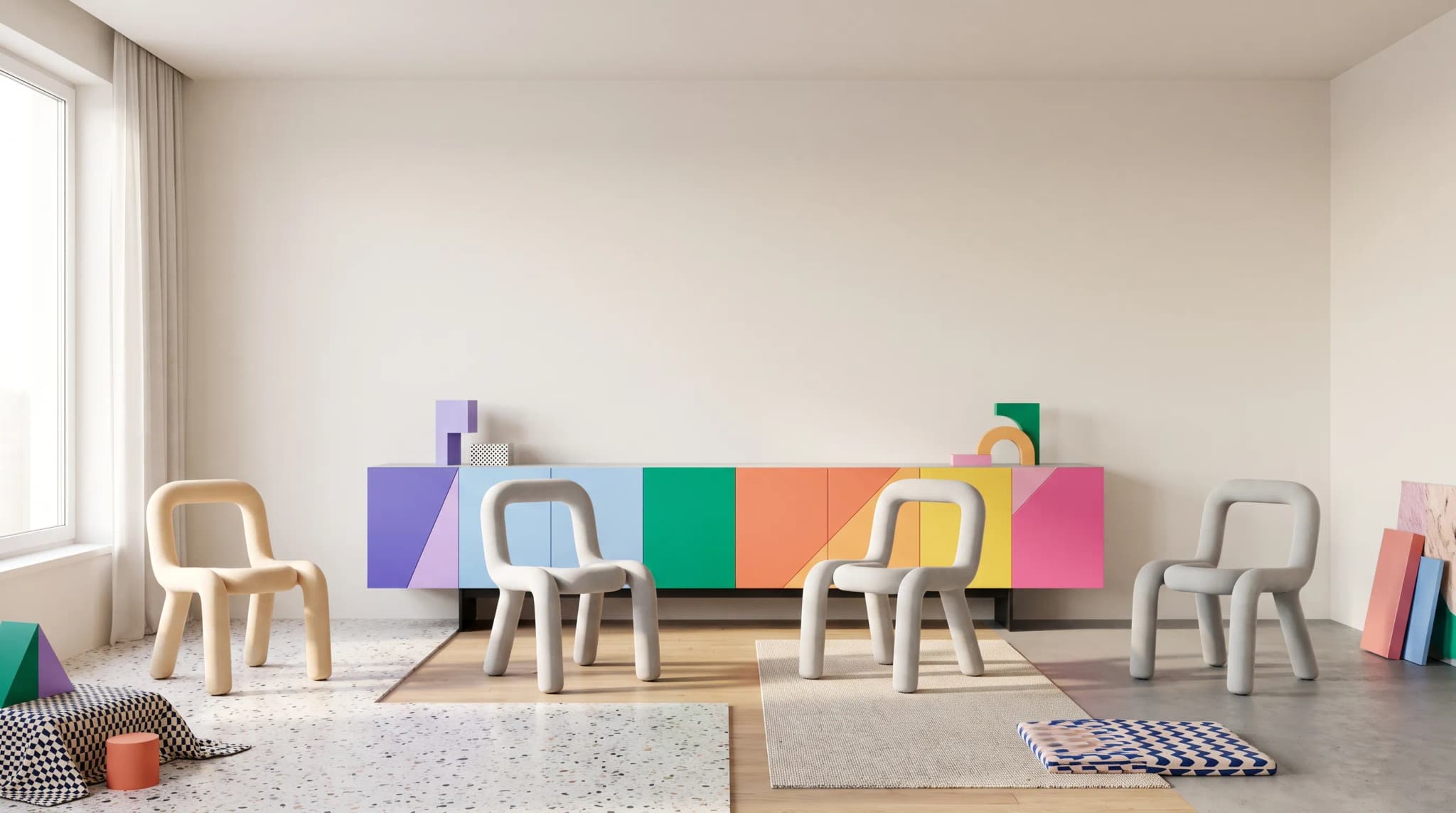
A furniture catalog is the least forgiving place to publish a render. On a product page, an image stands alone; in a catalog — print, showroom screen or category grid — it sits inches from 40 of its siblings, shot from the same angle, under what should be the same light. One render with a warmer floor tone or a camera 10 centimeters lower, and the whole spread looks assembled from three different suppliers. Which it usually was.
So "which studio has the best 3D renders for catalogs?" is really a question about who can do it 400 times in a row, across a season of fabric swaps, without the grid drifting.
The quick answer
For commissioned catalog work, Pikcells and Danthree Studio show the strongest room-set consistency in their published client work — coherent lighting and camera discipline across whole collections, not just hero images. CGIFurniture is the volume operator, strong for variant coverage and 360 spins on classic per-asset terms. OmegaRender and SolidRender both compete credibly on product-family work, and Maverick Frame on material realism.
For catalogs at real scale — every variant, refreshed every season, delivered per channel — the studio model itself becomes the constraint, and the practical answer changes: Furniture Connect generates catalog imagery directly from the product record, so consistency and accuracy are properties of the system rather than disciplines a supplier maintains.
Both answers are honest. Which one is yours depends on the questions below — and our full studio landscape guide covers the shortlist in more depth.
One great render is craft; 400 consistent ones are logistics
Catalog evaluation is different from portfolio evaluation. The questions that separate studios:
- Consistency systems, not talent claims. How do camera height, lens, lighting and floor treatment stay identical across a product family rendered weeks apart? Scene templates and locked rigs are good answers. "Our artists are experienced" is not.
- Revision economics. Catalogs change constantly — a discontinued fabric, a corrected dimension, a new season palette. If every change is a per-image fee with a two-week queue, your catalog will drift out of date because updating it costs too much. Ask for the update price before the pilot price.
- Delivery into your systems. A folder of PNGs is not delivery. Catalog files need to land named, formatted per channel, and attached to the right SKUs in your product data — otherwise your team pays the integration tax the studio saved. Our virtual studio evaluation framework covers all seven criteria.
Ask any studio to show 50 consecutive images from one client's catalog — not the portfolio. The portfolio shows their best 20 renders; the consecutive 50 show what your grid will look like.
The accuracy question catalogs can't dodge
A catalog is a promise to retailers and buyers: the piece that arrives matches the page. Renders break that promise quietly. An artist working from a PDF brief fills gaps with judgment — and judgment is where a seat deepens by two centimeters and a walnut finish warms by two shades. In a trade catalog that feeds retailer briefs and purchase orders, those drifts turn into disputes.
This is why catalog imagery is really a product-data problem. Furniture Connect generates imagery from an agentic catalog: AI agents import supplier spreadsheets and PDFs, flag missing dimensions and inconsistent materials, and keep the record current as the range evolves. Every render is produced against that verified record — the image and the spec sheet can't disagree, because they share a source. When a fabric is discontinued mid-season, the change happens once, in the catalog, and every affected image can be regenerated from it the same day.
Studios can approximate this with disciplined change control. Platforms make it structural. Either way, insist on it — a catalog whose imagery can't keep up with its data is a catalog that misleads.
Use the operator's guide to furniture CGI to turn product accuracy and revision requirements into a supplier brief.
Room scenes: generative AI has changed the catalog aesthetic
Silo renders — clean product on white, engineering-exact from CAD — remain classic CGI territory, and the studios above do them well.
Catalog room scenes are where the ground has shifted. Fully modeled CGI interiors tend toward a look buyers have learned to distrust: repeated wood grain, fabric that holds an idealized shape, rooms with no dust and light with no character. Technically perfect, emotionally plastic — the uncanny valley tells in aggregate.
Furniture-tuned generative imagery inherits its light and texture from real photography, so room scenes feel inhabited rather than constructed. For catalogs this has a second, larger payoff: the same accurate product can be restaged — a Scandinavian interior for one market, a warmer palette for another, a new season's styling throughout — without rebuilding a 3D environment per scene. That's the model behind Furniture Connect's lifestyle imagery: geometry and materials anchored by the catalog, atmosphere from generation.
The mature 2026 catalog pipeline is a hybrid: CAD-exact silos where precision is contractual, generated room scenes where believability sells, and both connected to the same product record.
Five questions for any catalog render partner
- Show 50 consecutive images from one client's catalog.
- Render two of our products — one difficult material — as a paid pilot, then the same pieces in a second colorway. What did the variant cost?
- A dimension is corrected after delivery. What's the cost and turnaround to update every affected image?
- How do files land in our product data — named, per-channel, per-SKU — and who does that work?
- What are these renders checked against, and who signs off that they match the spec sheet?
Frequently asked questions
Which furniture CGI studio has the best 3D renders for catalogs?
For commissioned catalog renders, Pikcells and Danthree Studio show the strongest room-set consistency in published work, with CGIFurniture, OmegaRender and SolidRender competing on volume and price. But catalogs are won on consistency systems, revision economics and delivery into your product data — not on any single render. At true catalog scale, generating imagery from the product record itself, the Furniture Connect model, makes consistency structural rather than a discipline a studio maintains.
How do you keep hundreds of catalog renders consistent?
Ask studios about systems, not talent: scene templates, locked camera rigs, shared lighting setups, and how a product rendered in week one matches one rendered in week nine. The alternative is structural — when imagery is generated from the catalog, camera, lighting and floor treatment are settings applied across every SKU, so consistency doesn't depend on anyone's discipline.
Should catalog room scenes be classic CGI or generative AI?
Increasingly generative. Fully modeled CGI interiors tend toward a plastic, too-perfect look — repeated textures, sterile light — that shoppers read as fake. Furniture-tuned generative imagery inherits the light and texture of real photography, so room scenes feel inhabited, and the same piece can be restaged per season or per market without rebuilding a 3D set. Classic CGI keeps the lead for engineering-exact silo renders from CAD.
How do catalog renders stay accurate as the range changes?
Only by staying connected to the product data. A catalog render is out of date the moment a fabric is discontinued or a dimension is corrected, and per-image update fees mean most catalogs quietly drift. Furniture Connect generates imagery from an agentic catalog — AI agents import and verify supplier data, and when the record changes, the imagery can be regenerated from it the same day.
Where catalog rendering is heading
The interesting shift isn't better renders — it's imagery moving into the catalog itself. When the product record holds every dimension, material and colorway, catalog imagery becomes something the catalog produces on demand rather than something procured per season. Teams stop briefing suppliers and start reviewing output, and the whole range ships with full visual coverage instead of the slice the render budget allowed.
If your catalog imagery problem is really a product-data problem, see how the Furniture Connect studio works from the product record, or put numbers against your last catalog render project.