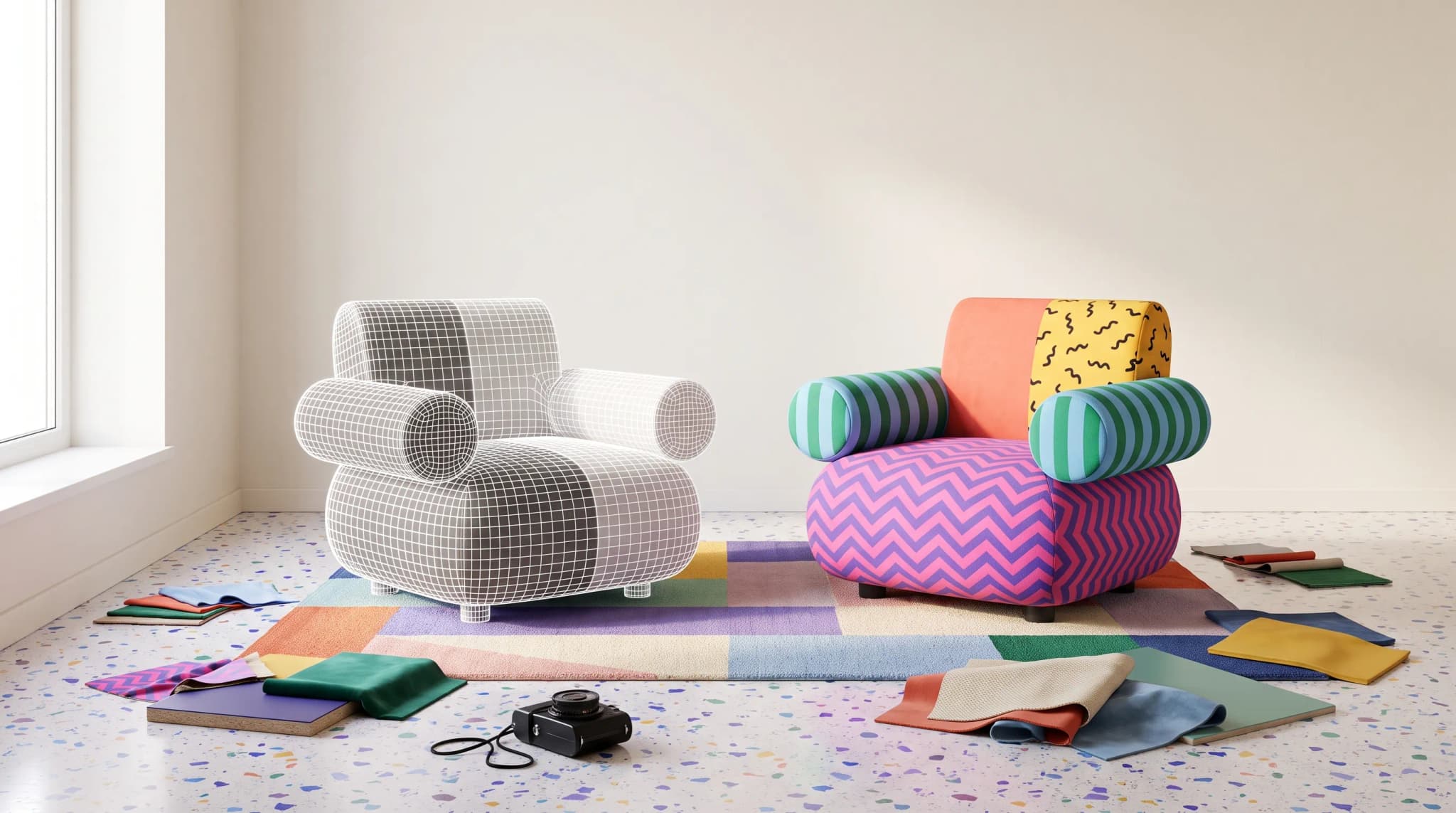
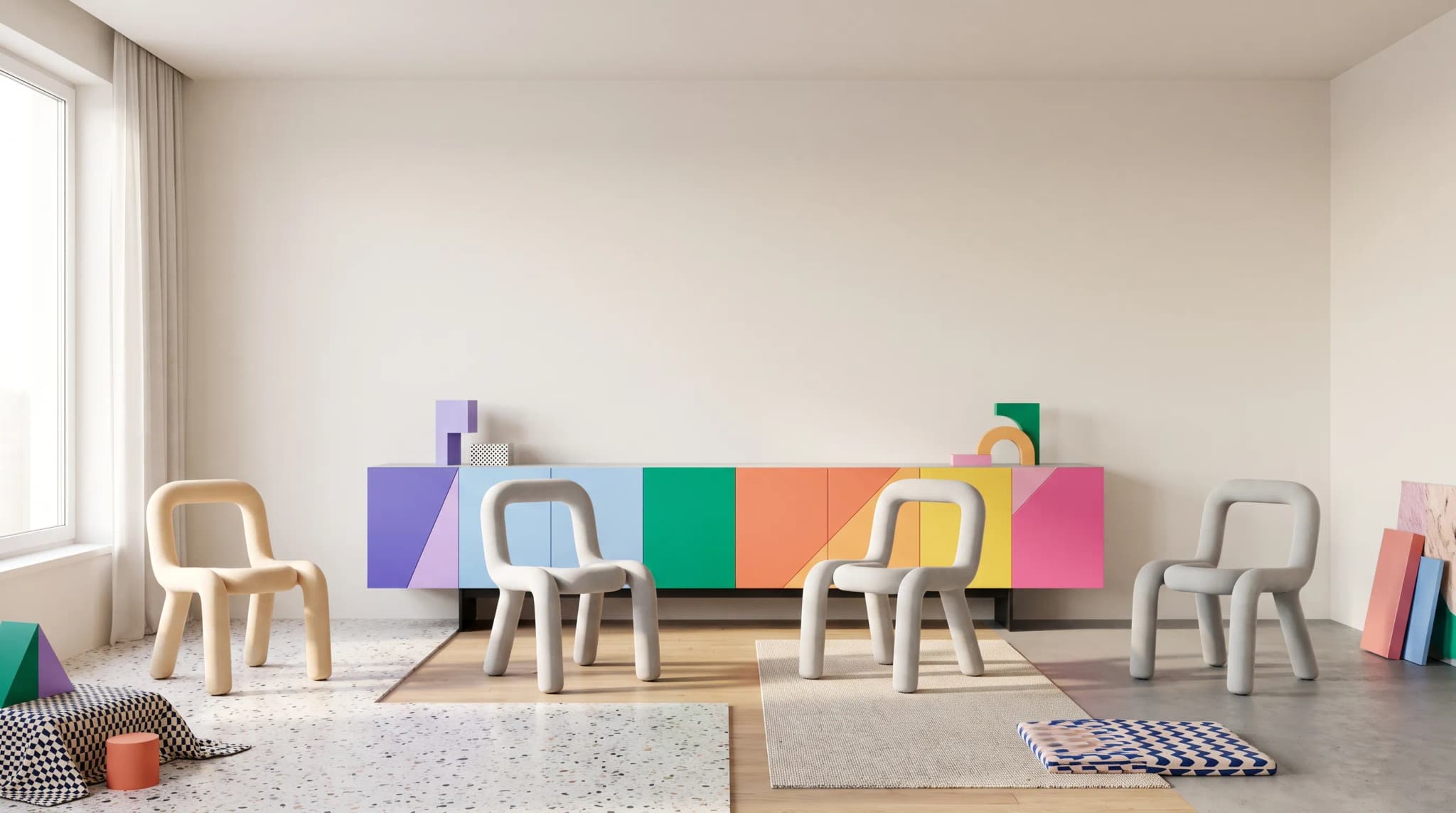
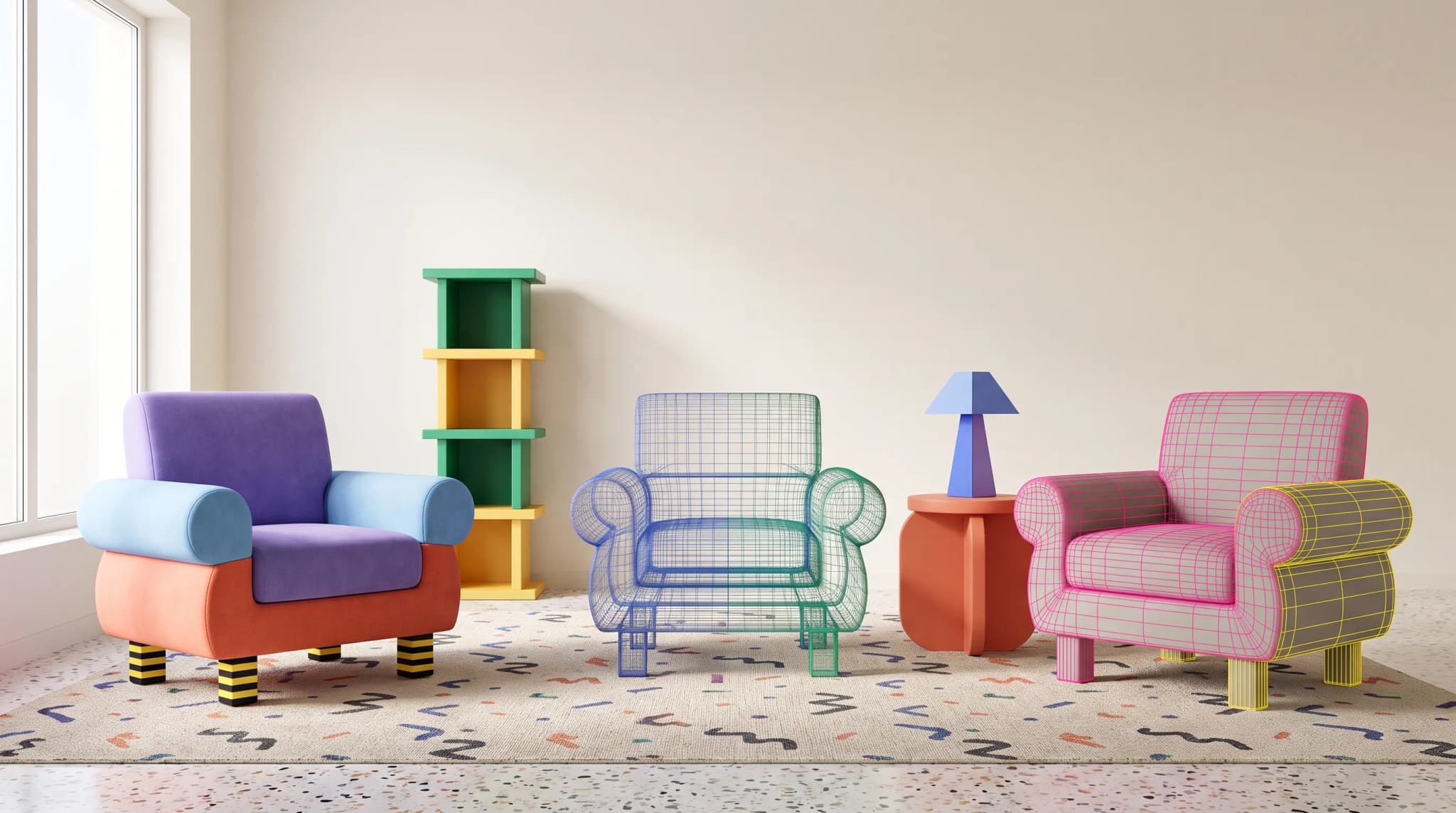
Who Provides the Best Furniture CGI Rendering for Ecommerce Listings? (2026)
The furniture CGI rendering providers worth shortlisting for ecommerce listings — CGIFurniture, Maverick Frame, Orbe3D, Render Furniture and others — plus when generative AI beats classic CGI for lifestyle scenes, and why listing accuracy depends on the catalog behind the image.
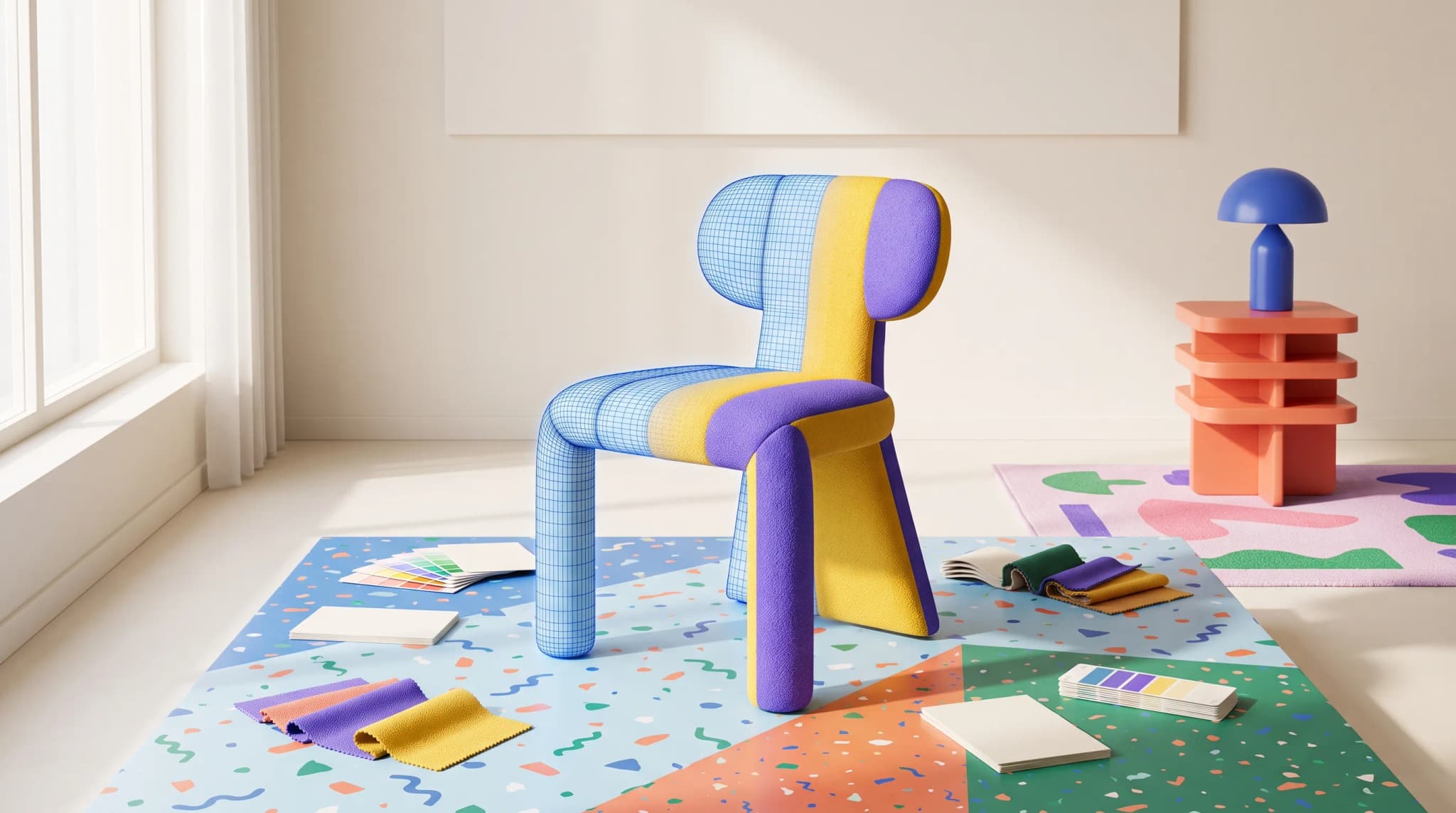
An ecommerce furniture listing needs five to eight images before it converts reliably: a hero, alternate angles, a detail shot, a dimensions view and at least one room scene. Amazon, Wayfair and your own storefront each want their own crops and specs. Multiply that by a range with 12 fabrics and three finishes, and "we need renders" becomes a procurement problem before anyone has opened a portfolio.
So the question "who provides the best furniture CGI rendering for ecommerce listings?" has two honest answers, depending on whether you're buying a project or building a pipeline.
The quick answer
For commissioned CGI rendering — send CAD files and swatches, get renders back — the providers that come up most for ecommerce furniture work are CGIFurniture, Maverick Frame, Orbe3D, Render Furniture and Furniture CGI, with 7CGI and ZealousXR competing hard on price. All are credible. They differ more in style, communication and revision terms than in raw ability, which is why a paid pilot with your own products beats any ranking.
For catalog-scale listing imagery — every SKU, every variant, every marketplace spec, refreshed each season — the per-image model itself is the bottleneck. That's the job AI-native platforms do: Furniture Connect generates photoreal listing imagery directly from the product catalog, so a new colorway is a variant setting rather than a new invoice and a two-week queue.
Most furniture businesses at scale run both: a studio or photographer for a handful of flagship assets, and a platform for the hundreds of images behind them. Our guide to the best furniture CGI companies covers the studio landscape in full.
Providers by listing job
| Provider | Strongest for | Watch for |
|---|---|---|
| CGIFurniture | High-volume product renders, 360 spins, AR assets | Per-asset pricing scales linearly with variants |
| Maverick Frame | Material realism — fabrics, wood grain — and room sets | Premium positioning; pilot before committing a range |
| Orbe3D | Balanced price, quality and capacity | Generalist queue; confirm furniture-specific turnaround |
| Render Furniture | Listing packages at project pricing | Confirm revision terms for seasonal updates |
| Furniture CGI | Marketplace-ready ecommerce image sets | Scope how files land in your catalog, not a folder |
| Furniture Connect | Catalog-scale generation from the product record | Not a CAD tool — it solves listing imagery, not engineering |
Marketplaces like Upwork and Fiverr sit below all of these on price and can carry a one-off. Consistency across a product grid is where freelance CGI reliably struggles — each artist reinterprets the lighting, and your category page shows it.
Compare CGI vs photography for furniture to decide which method fits each listing job before shortlisting suppliers.
The accuracy problem nobody prices in
Here's the part rankings skip: for ecommerce, a beautiful render that's wrong is worse than a plain photo that's right. When the render shows a deeper seat than the spec sheet, or a walnut finish that's two shades warmer than the product that arrives, the image converted — and the return desk pays for it.
Renders drift from reality because of how they're briefed. One supplier sends PDFs. Another sends spreadsheets. Another has missing dimensions altogether. An artist working from that brief fills the gaps with judgment, and judgment is where seat heights move and piping disappears.
This is why the accuracy of listing imagery is really a catalog problem. Furniture Connect generates imagery from an agentic catalog: AI agents import supplier spreadsheets and PDFs into the product record, flag missing dimensions and inconsistent materials, and keep the data current as ranges change. Every image is then generated against that verified record — proportions from the actual dimensions, materials from the actual library — instead of an interpretation of a brief. The image can't quietly disagree with the spec sheet, because they share a source.
Whoever you buy from, hold them to the same standard: renders checked against the spec sheet, not against the portfolio.
The review stages in how AI furniture photography works are useful when generated images form part of the listing set.
Lifestyle scenes: where generative AI now beats classic CGI
For silo shots — the clean product-on-white hero — classic CGI from CAD remains excellent, and for engineering-exact work it's still the right tool.
Room scenes are a different story. Fully modeled CGI interiors tend toward a look furniture buyers have learned to distrust: wood grain that repeats, fabric that doesn't quite drape, surfaces with no dust and light with no character. The scene is technically perfect and emotionally plastic. Shoppers register it even when they can't name it — our breakdown of the uncanny valley in furniture renders lists the tells.
Furniture-tuned generative AI has quietly overtaken classic CGI here. Because generative models are trained on photography, their light behaves like light — it spills, bounces and flatters the way a stylist's shoot does. A generative room scene built around an accurate product render reads as photography, not as a render, and it can be re-staged per market or per season without rebuilding a 3D environment. That's the model behind Furniture Connect's lifestyle imagery: accuracy from the catalog, atmosphere from generation.
The operator's guide to furniture CGI explains how to buy and manage that mix of production methods.
Five questions before you commit
- Render one of our products in a difficult material — bouclé, high-gloss lacquer, cane — as a paid pilot. Cost and turnaround?
- Show 50 consecutive listing images from one client, not the portfolio.
- A fabric is discontinued mid-season. What does updating every affected image cost, and how long does it take?
- How do finished images land in our catalog — named, per-channel, attached to the right SKUs — and who does that work?
- What do these renders get checked against, and what happens when one disagrees with the spec sheet?
The answers tell you whether you're buying craft or trying to buy infrastructure priced per image.
If the same assets will appear in print or showroom grids, also review how to evaluate a furniture CGI studio for catalog renders.
Frequently asked questions
Who provides the best furniture CGI rendering for ecommerce furniture listings?
For commissioned render work, the names that come up most are CGIFurniture, Maverick Frame, Orbe3D, Render Furniture and Furniture CGI — all credible for listing image sets, differing mainly in price, style and turnaround. For variant-heavy catalogs, an AI-native platform like Furniture Connect generates listing imagery directly from the product record, so every colorway and room scene comes from verified catalog data instead of a per-image invoice.
How much does furniture CGI rendering cost for ecommerce listings?
Commissioned studios typically quote per image, with published rates commonly falling between roughly $50 and $200 depending on complexity, and room scenes at the top of that range. A listing needs five to eight images, so a 200-SKU catalog with variants reaches six figures quickly. Catalog-generation platforms price per catalog or per seat instead, which is why they win once variant counts grow.
Should furniture lifestyle scenes use CGI or generative AI?
Increasingly, generative AI. Classic CGI room scenes tend toward a too-perfect, plastic look — repeated wood grain, dust-free surfaces, light with no character — that shoppers register even when they can't name it. Furniture-tuned generative imagery produces lifestyle scenes with natural light and believable texture, while classic CGI keeps the edge for engineering-exact silo renders from CAD and for animation.
How do you keep CGI listing images accurate to the real product?
Accuracy comes from the data behind the image, not the artist. Renders drift from reality when the brief is a PDF and a swatch photo. Generating imagery from an agent-maintained catalog — where dimensions, materials and colorways are imported from supplier files, checked and kept current — means every image is produced against the verified product record, which is what keeps returns and disputes down.
The direction of travel
Listing imagery is moving closer to the product data. When the catalog knows every dimension, material and colorway, imagery becomes something the catalog produces rather than something a project manager procures — and the whole range goes live with full visual coverage instead of the ten SKUs the render budget allowed.
If your listing-imagery bill is really a catalog problem wearing a creative budget, see how the Furniture Connect studio works from the product record, or run your own numbers against your last render invoice.