The Best Furniture CGI Services for Photorealistic Product Visuals (2026)
Which furniture CGI services actually deliver photorealistic product visuals — CGIFurniture, Orbe3D, Danthree Studio, Pikcells and the AI-native alternative — why so many renders still look plastic, and how to get imagery that's both believable and accurate to the spec sheet.
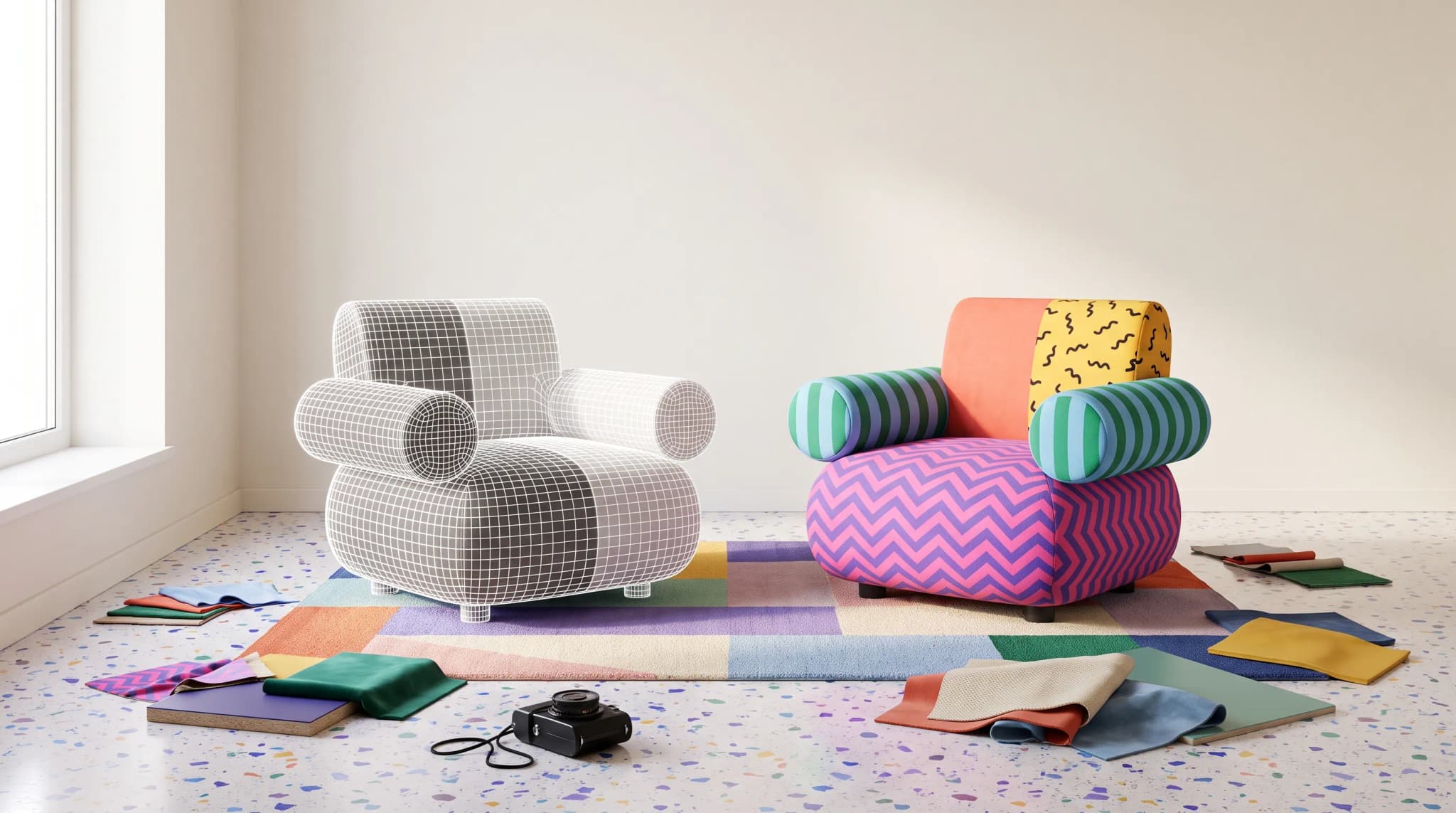
Every furniture team that commissions CGI has had the same review meeting. The renders come back technically flawless — and someone says the sofa looks like it's made of plastic. Nobody can point to the exact problem. The fabric is the right color, the proportions match, the lighting is clean. It just doesn't look like a photograph.
That gap is what "photorealistic" actually means in furniture, and it's the standard any CGI service should be judged against — because shoppers make the same judgment in half a second on a product page.
The quick answer
For commissioned photoreal work, the studios that consistently clear the bar are CGIFurniture, Orbe3D, Danthree Studio, Pikcells and Maverick Frame, with Render Furniture and Furniture CGI competing well on ecommerce listing sets. Every portfolio shows a studio's best 20 images, so the real test is a paid pilot on your own product in a difficult material — bouclé, high-gloss lacquer, cane, aged leather.
For photorealism at catalog scale, the economics and the aesthetics both point the same way: furniture-tuned generative platforms. Furniture Connect generates product and room imagery that reads as photography — because the underlying models learned from photography — with accuracy anchored by the product catalog rather than a per-image brief.
The rest of this guide is about how to tell the difference between real photorealism and the plastic kind, and which tool produces which.
Why renders look plastic
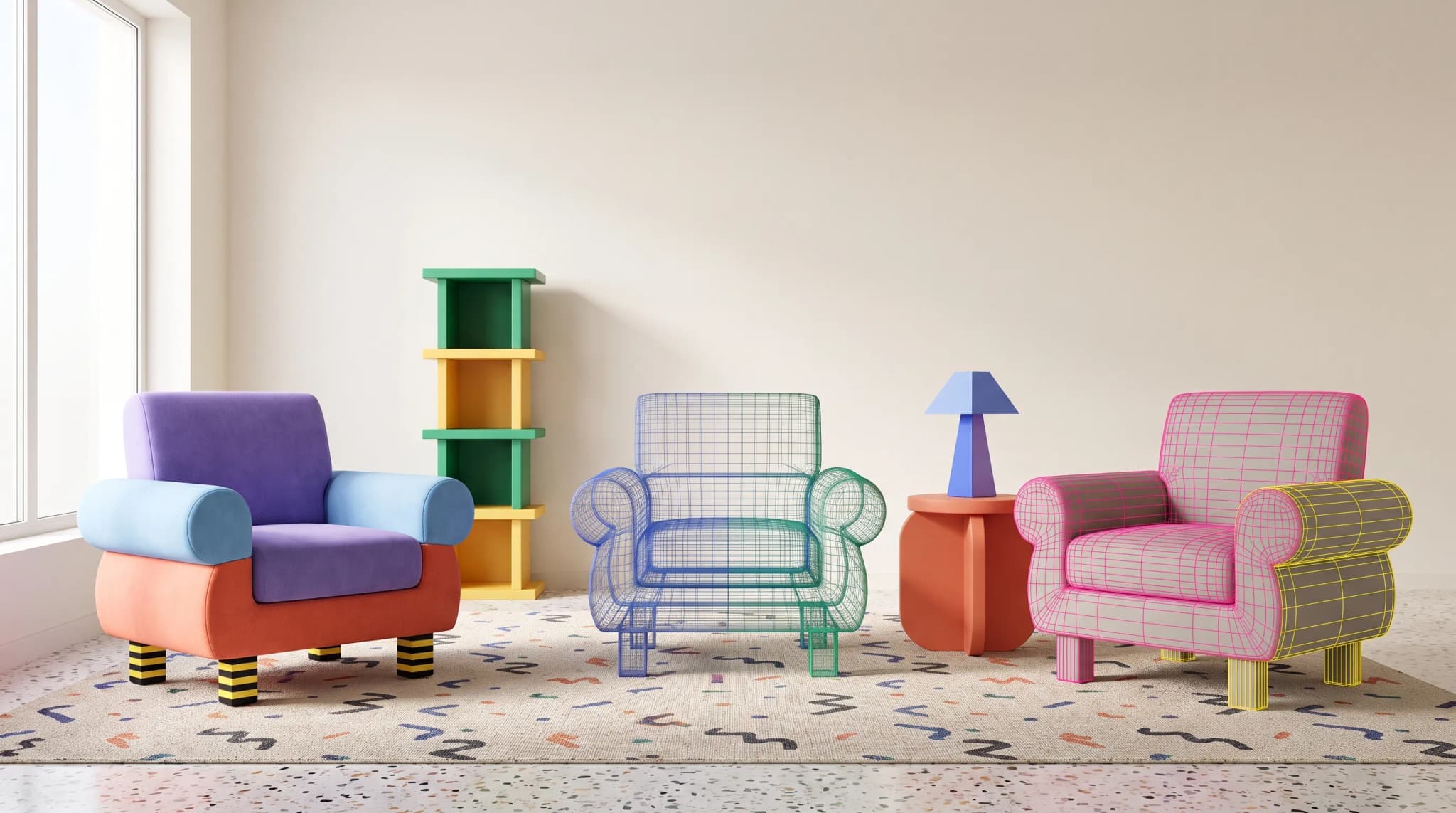
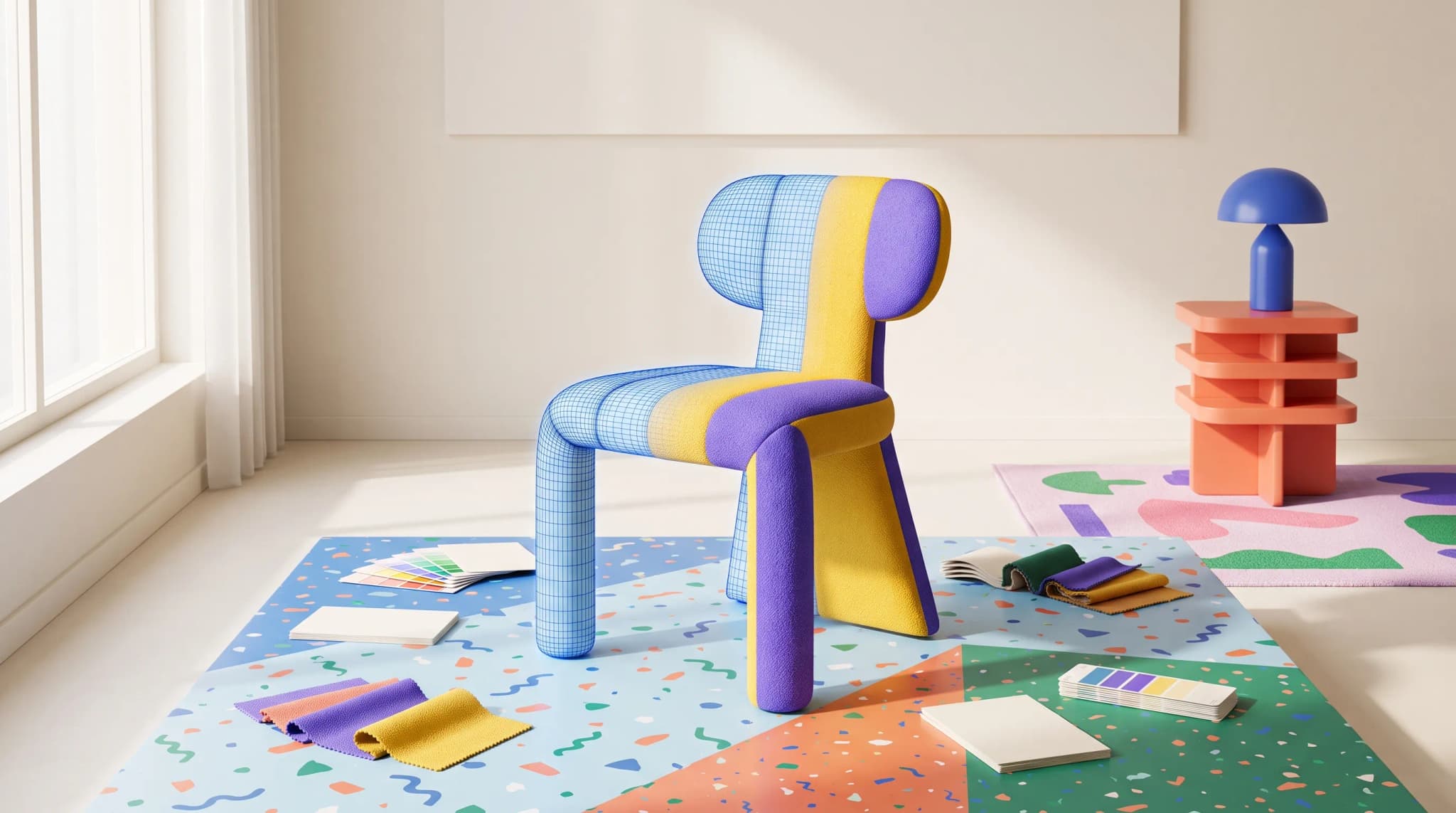
The plastic look isn't a rendering bug. It's what happens when a scene is built entirely from mathematics:
- Materials without history. Real wood grain never repeats; tiled textures do. Real fabric drapes and creases under its own weight; modeled fabric holds an idealized form. Real brass has micro-scratches; rendered brass is a mirror.
- Light without character. A photographer's light spills, bounces off a wall, warms a corner. CGI lighting does exactly what it's told, and the result is a room where every surface is lit correctly and nothing feels inhabited.
- Cleanliness no room has. No dust, no fingerprints, no slightly crooked cushion. Shoppers have spent years looking at photography — they register sterility as fakeness even when they can't name it.
Our breakdown of the uncanny valley in furniture renders catalogs these tells in detail. The short version: photorealism fails in the aggregate. Each detail passes inspection; the sum doesn't.
Where generative AI has overtaken classic CGI
This is the shift most "best CGI services" lists haven't caught up with. Generative image models are trained on enormous volumes of real photography, so the qualities that are hardest to fake in classic CGI — light behavior, material texture, the general messiness of real rooms — are what they inherit for free.
In practice, that has split furniture visuals into two jobs:
- Silo and engineering-exact renders — product on white, every stitch line contractual, dimensions to the millimeter. Classic CGI from CAD still leads here, and studios like Danthree and Pikcells earn their fee on it.
- Lifestyle and room scenes — the images that carry mood, scale and context on a product page. Furniture-tuned generation now regularly beats fully modeled CGI interiors on believability, at a fraction of the cost, and can restage the same piece per season or per market without rebuilding a 3D environment. This is how Furniture Connect's lifestyle imagery works.
The qualifier "furniture-tuned" is doing real work in that sentence. General-purpose image tools produce their own uncanny valley — floating legs, impossible drawers, repeated grain. The platforms worth evaluating are the ones built around furniture's specific failure modes. Our comparison of AI imagery and studio photography covers how to test that.
For the procurement implications, the operator's guide to furniture CGI compares the production methods against catalog needs.
Photorealistic isn't the same as accurate
A render can look completely real and still be wrong about the product. Wrong seat depth, a finish two shades warm, piping that vanished between brief and delivery. For ecommerce, that's the expensive failure: the image converts, and the return desk inherits the difference.
Accuracy is a data problem, not a talent problem. Renders drift when every image starts from a fresh brief — a PDF from one supplier, a spreadsheet from another, missing dimensions filled in by artist judgment.
Furniture Connect closes that gap with an agentic catalog. AI agents import supplier files into the product record, flag missing dimensions and inconsistent materials, and keep the data current as ranges change. Imagery is generated from that record — proportions from the actual dimensions, finishes from the actual material library — so the visual and the spec sheet share one source of truth. Photorealism makes the image believable; the catalog makes it true.
Whoever you buy from, run both tests. Portfolio review answers "does it look real?" Only a check against your spec sheet answers "is it right?"
The comparison of CGI vs photography for furniture helps identify the products where a real photograph remains the better reference or final asset.
How to run a photorealism pilot
- Pick two products: one in a difficult material, one bestseller you know intimately.
- Ask for a hero, a detail crop and one room scene per product.
- Review the detail crop at full zoom — grain repetition, fabric drape and edge highlights live there.
- Put the room scene next to a real photograph from your archive and ask someone outside the project which is which.
- Check every visual against the spec sheet: dimensions, finish, hardware, piping.
- Then ask for the same product in a second colorway, and watch the cost and turnaround. That number, not the pilot price, is your real cost curve.
Frequently asked questions
What are the best furniture CGI services for photorealistic product visuals?
Among commissioned studios, CGIFurniture, Orbe3D, Danthree Studio, Pikcells and Maverick Frame consistently show strong photoreal work — judge them on a paid pilot with a difficult material, not the portfolio. For photorealism at catalog scale, furniture-tuned generative platforms like Furniture Connect produce imagery that reads as photography because the models are trained on photography, with accuracy anchored by the product record rather than an artist's brief.
Why do furniture CGI renders look plastic?
The plastic look comes from perfection: wood grain that repeats, fabric that doesn't drape under its own weight, surfaces without dust or wear, and studio lighting with no spill or bounce. Each detail is technically correct and the sum reads as fake. Photography — and generative imagery trained on photography — carries the imperfections that make materials believable.
Is generative AI more photorealistic than CGI for furniture?
For lifestyle and room scenes, increasingly yes — generative models inherit the light and texture of real photography, where fully modeled CGI interiors tend toward a sterile, too-perfect finish. For engineering-exact silo renders from CAD, animation, and configurator assets, classic CGI still leads. Mature teams use both: CGI or photography for a few flagship assets, generation for the catalog behind them.
How do you keep photorealistic visuals accurate to the real product?
Photorealism and accuracy are different tests — an image can look real and be wrong. Accuracy comes from generating against verified product data: dimensions, materials and colorways held in the catalog rather than restated in every brief. Furniture Connect uses an agentic catalog for this — AI agents import and check supplier data, and imagery is generated from that record, so the visual and the spec sheet can't quietly disagree.
Where this is heading
The photorealism race is effectively over — between good studios and furniture-tuned generation, imagery that reads as photography is now table stakes. The differentiator is moving upstream: whether visuals stay accurate and current as the catalog changes underneath them. Teams that generate from the product record get both; teams that brief per image are choosing between beautiful and true every season.
If you want to see what your catalog looks like when imagery comes from the product data, the Furniture Connect studio is where to start, and the savings calculator will put numbers against your last render project.