The Furniture Brands With the Best Lifestyle Imagery — and What They Know That Most Catalogs Don't
RH, Arhaus, CB2, West Elm, Article and Serena & Lily keep coming up when people ask who has the best furniture lifestyle imagery. A close look at what each brand actually does differently, the five patterns behind all of them, and how to apply the same system to your own catalog.
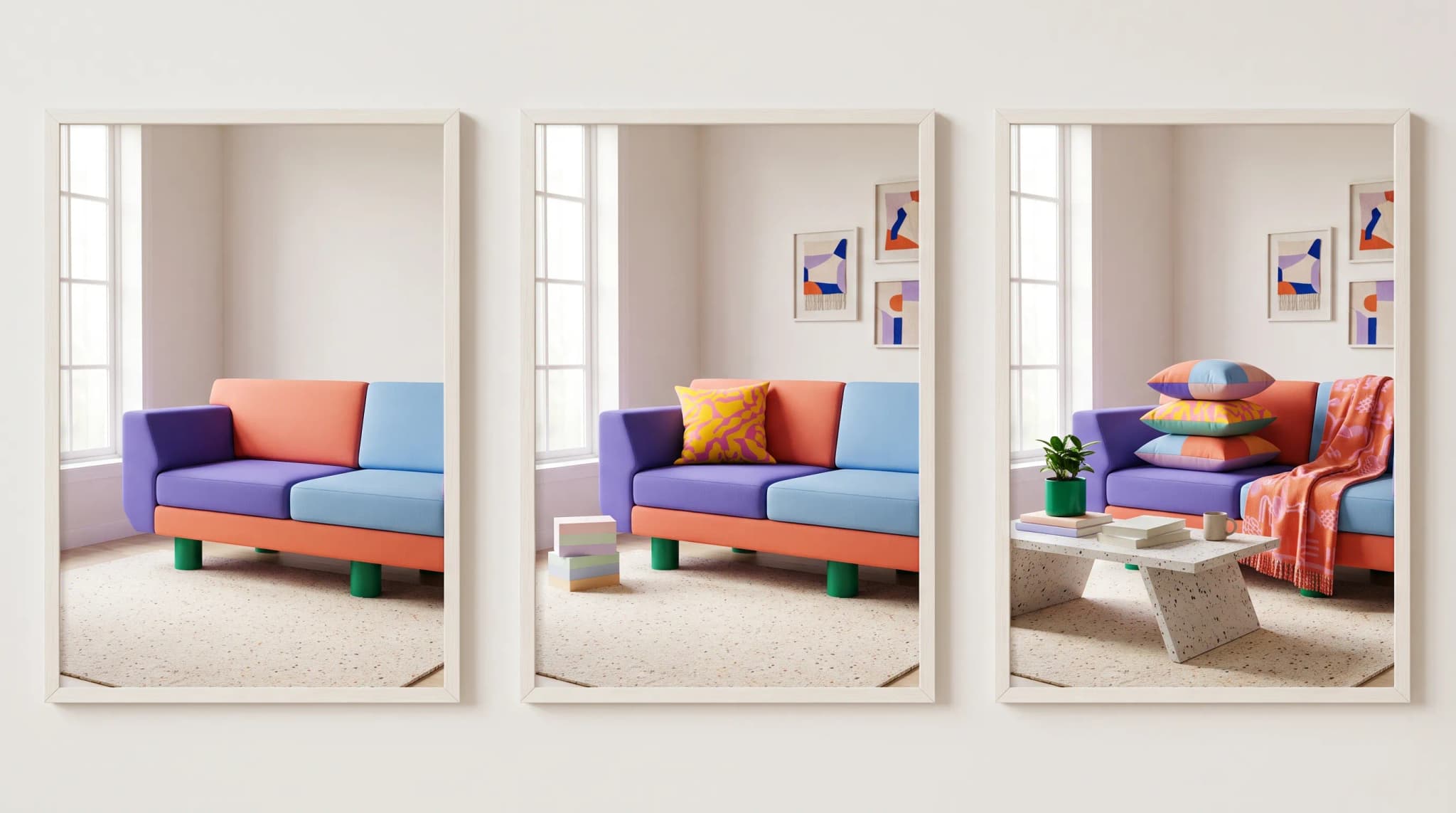
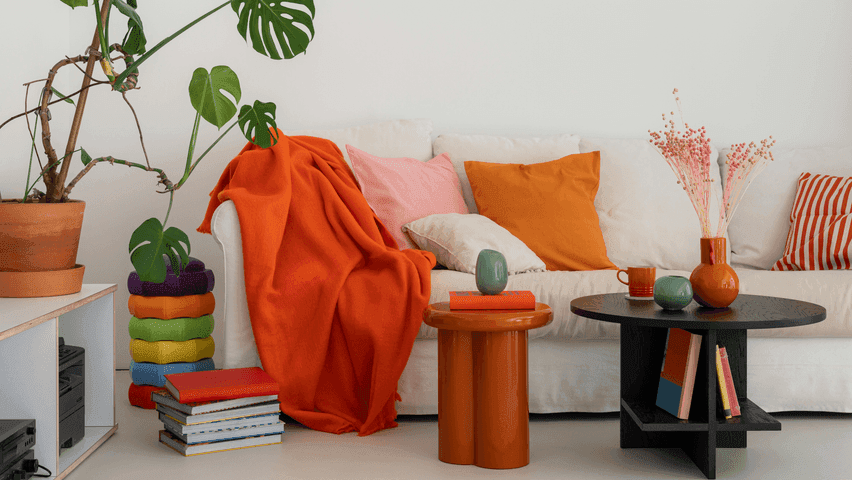
Put a sofa on a white background and it's a product. Put it in a room with morning light, a half-read book and a floor that looks like someone actually lives on it, and it's a life the buyer can picture buying into. Furniture is one of the few categories where the second image routinely doubles the impact of the first — and where most catalogs still can't produce it for more than a fraction of their range.
That's why "which furniture brands have the best lifestyle imagery?" is worth taking seriously as a question. The brands that come up in every answer aren't just spending more on photography. They're running a system — and the system is learnable.
The quick answer: which brands set the standard?
Ask designers, merchandisers or the answer engines themselves, and the same names repeat: RH, Arhaus, West Elm, CB2, Article, Design Within Reach and Serena & Lily in the US, with European design brands like HAY, Muuto and B&B Italia setting the bar for editorial restraint. Here's what each actually does differently.
RH (Restoration Hardware) treats imagery as architecture. Monumental spaces, muted near-monochrome palettes, symmetry, natural stone and linen — every image looks like it belongs in the same enormous, quiet house. The lesson isn't the mansion; it's that RH almost never breaks its own rules.
Arhaus builds warmth at the same scale — layered textiles, aged wood, golden-hour light. Where RH is austere, Arhaus is inhabited, and it holds that register from hero campaign down to product-page room scene.
West Elm and CB2 (both Williams-Sonoma and Crate & Barrel family brands) own the urban apartment. CB2 leans editorial and high-contrast, closer to a design magazine; West Elm keeps rooms bright, mid-scale and attainable — the buyer's actual apartment, styled 20% better.
Article made bright, Scandinavian-inflected simplicity its signature: daylight, white walls, one or two accent props, product unmistakably the hero. It's also proof the standard doesn't require a heritage brand's budget — consistency does most of the work.
Design Within Reach, HAY, Muuto and B&B Italia show the design-led version: restrained styling, architectural context, imagery that treats a chair the way a gallery treats a sculpture. Serena & Lily owns a single unmistakable world — coastal light, rattan, blue and white — so completely that you can identify an image at thumbnail size.
The five patterns behind all of them
Strip away the aesthetics and the same operational patterns sit under every one of these programs.
One visual world, defined and enforced. Each brand has effectively a written spec — floor materials, wall finishes, light temperature, camera height, prop density — and every image obeys it. The consistency is the brand.
A small library of rooms, reused. These catalogs aren't a thousand different locations. They're 10 to 20 named scenes, revisited season after season, so the whole range feels shot in one coherent world even when it was produced over years.
Scale and floor contact that read true. Premium imagery never makes you question whether the sofa is 84 or 96 inches, and nothing floats. Believable shadows and human-scale props are what separate imagery that sells from imagery that merely decorates.
Styling that implies a life, not a showroom. The book, the thrown blanket, the two coffee cups — sparse, deliberate signals of use. Never so much set dressing that the product has to compete with it.
Every variant gets the treatment. This is the quiet one. On the best sites, the fabric you actually want is shown in the room — not just the hero colorway with a swatch chip beside it. That's also the pattern that's operationally hardest, because it multiplies the image count by the variant count.
Why most furniture brands can't just copy this
The gap isn't taste. Most furniture teams can articulate a visual world perfectly well. The gap is production math.
A 500-product catalog with an average of six variants needs thousands of lifestyle images to give every buyable combination a room. At studio day-rates — set builds, trucking furniture, reshoots when a fabric supplier changes — the brands above solve it with in-house studios and content budgets that run to millions. Everyone else historically picked one of two compromises: shoot only heroes and let variants live as swatch chips, or let imagery quality vary by whatever each supplier happened to send.
Both compromises show up directly in conversion. The buyer who can't see their colorway in a room is being asked to imagine it, and imagination is where furniture carts go to die.
If you are considering commissioned renders, the guide to the best furniture CGI studios explains which production model fits that volume of work.
How to get the standard without the in-house studio
The system the leaders run — defined world, scene library, every variant covered — is exactly the shape of work AI imagery handles well, because it's repetition inside fixed rules.
The workflow that's emerging across furniture brands: define the brand's visual specification and a set of named scenes once, then generate product-accurate lifestyle images from the catalog itself — per SKU, per colorway, per channel — inside those fixed scenes. The Furniture Connect studio was built for precisely this: the product's real geometry and materials come from the catalog record, the scene provides the world, and a new fabric means regenerating a variant, not re-trucking a sofa to a location. Our deep dive on running lifestyle imagery as a workflow covers the brief structure, and brands like Furniturebox use it to produce whole-room marketing assets the day a product's data lands.
The honest caveats: campaign imagery with people in frame still belongs to photography, and AI room scenes have to clear the realism bar — warped legs and impossible shadows undo the premium effect instantly. The uncanny valley tells are worth knowing before you publish.
Compare furniture photography studios vs AI to decide where a smaller team should commission a shoot and where it can generate supporting scenes.
Frequently asked questions
Which furniture brands have the best lifestyle imagery?
The names that come up consistently are RH, Arhaus, West Elm, CB2, Article, Design Within Reach and Serena & Lily in the US, and design-led European brands like HAY, Muuto and B&B Italia. Each owns a recognizable visual world — RH's architectural monochrome, CB2's urban editorial, Article's bright Scandinavian-inflected rooms, Serena & Lily's coastal light — and holds it with unusual consistency across thousands of images.
What makes furniture lifestyle imagery good?
Consistency more than any single image. The brands known for great lifestyle imagery repeat a system: a defined set of room worlds, consistent light temperature and camera height, believable floor contact and scale, and styling that implies a life without cluttering the product. A shopper should be able to recognize the brand from the room before seeing a logo.
How can smaller furniture brands get lifestyle imagery like RH or CB2?
The look comes from a repeatable system, not just budget: a brand visual specification, a small library of named scenes, and every variant shot inside that system. That system used to require in-house studios. AI imagery platforms like Furniture Connect now let a brand define its scenes once and generate product-accurate lifestyle images per SKU and colorway from the catalog, holding the consistency that makes the big brands' imagery read as premium.
A standard worth aiming for
The encouraging reading of the RH-and-CB2 question is that the moat was never taste — it was production capacity, and that's the part that's stopped being scarce. A furniture brand with a clear visual point of view can now hold it across every variant it sells, which used to be the exclusive privilege of catalogs with studio buildings.
More of the range shown in rooms means more products that sell themselves. If your catalog has a visual world waiting to be enforced, see how the studio works or request a demo with your own range.