Why Furniture Range Launches Are Slow: The Product-Content Bottleneck
Why furniture range launches stall after the buying decision, how to find the real product-content bottleneck and what changes the launch date.

The range has been selected. Terms are agreed. Stock is ordered.
Then the launch disappears into a queue.
Someone is chasing dimensions. The studio is waiting for a sample. The ecommerce team is untangling variants. A document cannot be matched to the products it covers. The marketplace file needs another version of the same data.
This is the product-content bottleneck. The work matters, but much of the elapsed time comes from waiting between teams and rebuilding the same range for different destinations.
The five queues holding the launch
1. Imagery waits for a booking
A physical shoot depends on the sample, studio, photographer, styling, selection and retouching. If the hero image is a publish requirement, the rest of the listing waits too.
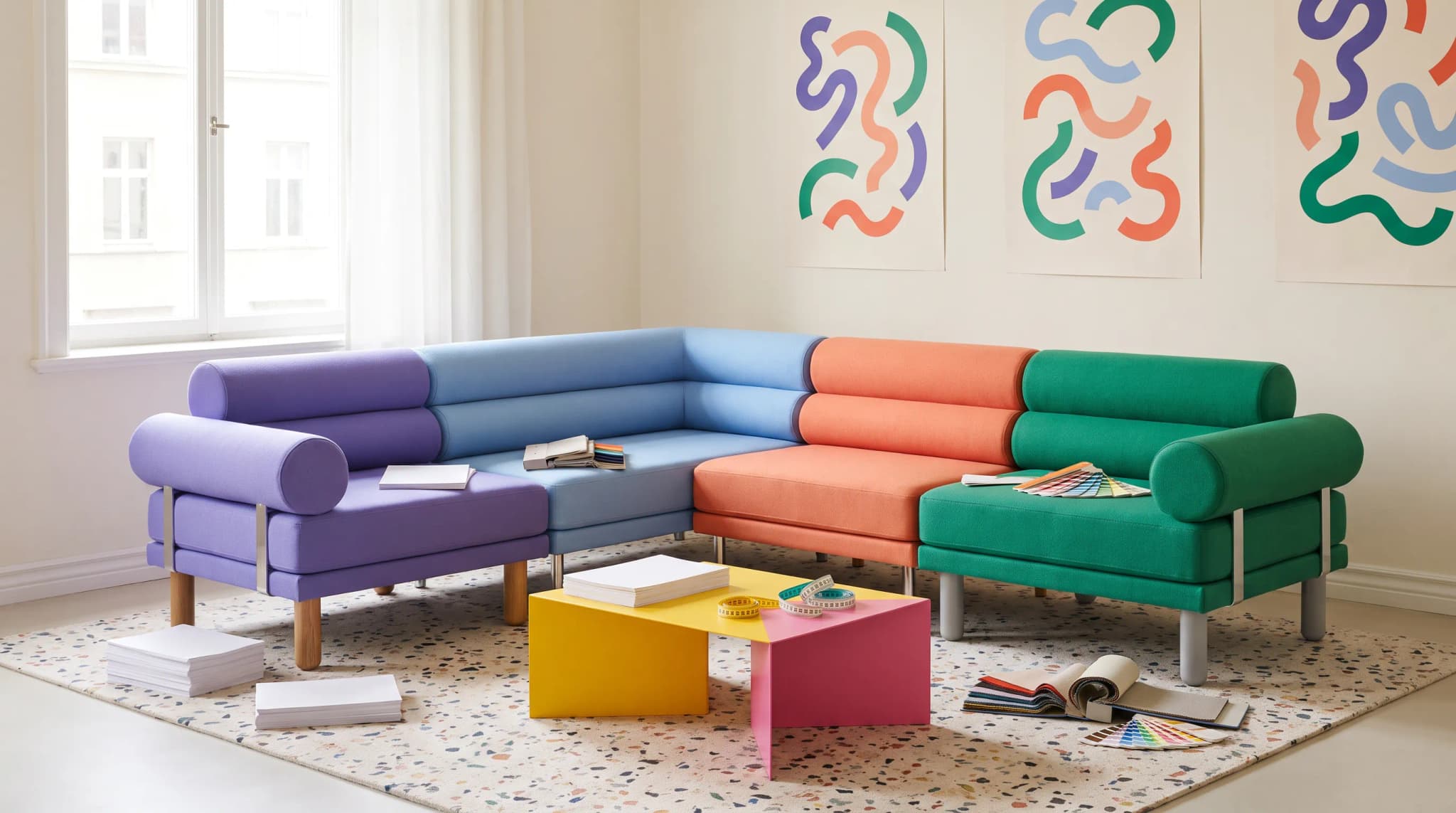
Variants make the gap larger. A supplier may offer 30 fabrics but photograph only the launch colorways. The other options can be sold, but customers cannot see them.
Furniture Connect changes that part of the workflow by creating packshots, lifestyle scenes and color variants from approved product photography. The same production job can run across hundreds of SKUs rather than being repeated one image at a time.[1]
That does not remove review. Each output still needs a person to compare it with the reference product and approve, amend or reject it. The gain comes from making imagery producible as the catalog develops, rather than tying every output to another studio date.
The workflow in how AI furniture photography works helps identify where an accurate reference image can support additional catalog assets.
2. Missing data stops the listing
The gaps are rarely decorative. They are seat height, access dimensions, material composition, assembly requirements, carton details and care instructions.
These facts may exist, but not in the supplier file. Every question becomes an email and every reply becomes another handoff. If the request starts only when the product page is being built, the missing data sits directly on the launch path.
The fix starts at intake: define what the product type needs, ask for the data and documents together, and keep a visible list of what is still missing. Why supplier data arrives incomplete explains why the same gaps recur, and why growing an assortment creates more than product work shows how the volume multiplies once variants and channels are counted.
3. Variant work multiplies
Furniture options multiply rather than add. Five sizes, 20 fabrics and three leg finishes create 300 possible combinations before orientation or cushion filling enters the picture.
Not every combination needs a separate page, but every purchasable combination needs an identity and a clear relationship to the right price, data and imagery.
Channels then require different projections of that structure. Google expects variants to be submitted separately and grouped with a shared item_group_id.[2] Its structured data supports variant properties such as color, size, material and pattern, but furniture may also vary by configuration, orientation and finish.[3]
If the source model is decided late, the catalog team rebuilds the range after the copy and images have already been attached. The furniture product data model helps make that decision before production begins.
4. Evidence sits outside the catalog
Compliance documents are often held by a supplier's technical team, a factory or a test house. The catalog team discovers the gap when publication is close, then has to work out which document covers which product or batch.
Requesting the evidence earlier does not guarantee a quicker supplier response. It does allow the chase to happen alongside the rest of the work.
The catalog record should hold the applicable regime, document reference, date, covered SKUs or batches and source file. A generic “compliant” checkbox cannot answer an audit question.
5. Each channel becomes another build
The website, retailer portal, Google feed, showroom, quote and printed catalog all want a version of the same range.
If every output begins in a separate spreadsheet or interface, every correction is repeated. A changed price, discontinued fabric or replacement image becomes several jobs and several chances for the channels to disagree.
The better operating model is one approved product record with a defined mapping for each destination. Furniture Connect's Agentic Catalog is designed to bring supplier data together, structure products and variants, fill content gaps with review and prepare ranges for channels.[4]
Channel rules still need to be set. Image ratios and minimum resolutions are not inferred automatically, and complex variant structures may need a channel-specific decision.
Find your own bottleneck before buying a solution
Published “average launch time” figures are rarely useful. Product complexity, supplier quality, markets and approval processes vary too much.
Measure your own process instead. For the next few ranges, record the date when:
- The complete supplier pack was requested.
- The first source file arrived.
- The product and variant structure was approved.
- Required facts and documents were complete.
- Imagery was ready for review.
- The range passed approval.
- The first and final SKUs went live.
Also record why each stage waited. The result will show whether the delay sits in production, supplier response, approval or channel rework.
Do not confuse the first SKU going live with the range being launched. The commercial gap often sits between the first easy products and the final variants.
What does a late launch cost?
Use your own figures and label any scenario as an example.
Example: if a range is expected to generate £400,000 in its first year and launches three weeks later than it could have, a simple even-revenue model puts £23,077 of selling time into those missed weeks. That is not a forecast or an industry benchmark; it is £400,000 ÷ 52 × 3. Replace every input with your own.
The less visible cost is range editing. When every new option creates weeks of content work, the business starts limiting which colorways and long-tail products it lists. The catalog becomes smaller than the range the company can actually sell.
Count these as well:
- Sellable variants with no accurate image
- Products held because one required field or document is missing
- Hours spent rebuilding the same range by channel
- Customer questions caused by missing product facts
- Seasonal selling weeks lost before a range is complete
What changes the launch date?
Five practical changes have the greatest effect:
- Define the publish standard before intake. Make required data, imagery and evidence explicit by product type and market.
- Request the whole supplier pack together. Product data, variant matrix, material library, imagery and compliance evidence should not be five separate chases.
- Model variants before content production. Attach copy, prices and assets only after the hierarchy is agreed.
- Produce imagery alongside the catalog. Use batch generation where it fits, followed by manual accuracy review and explicit variant linking.
- Prepare channels from one approved record. Map the source once, then maintain the differences deliberately.
Furniture Connect customer results show what this can look like in individual businesses. Bentincks reports reducing its product upload workflow from two to three weeks to just over one week. Gabriella White reports a 40% reduction in its shutter-click-to-website workflow. FW Style says batch processing lets the team generate hundreds of images in one job and reports a 30% increase in sales conversion.[5][6][7]
Those are named customer results, not an industry promise. Use them as examples of what changed, then measure your own baseline and outcome.
Frequently asked questions
Why do furniture range launches take so long?
Five queues hold them up: imagery waiting on a sample and a studio booking, missing product facts that stop the listing, variant work that multiplies faster than expected, compliance evidence held outside the catalog, and each channel being rebuilt as a separate job. Most of the elapsed time is waiting between teams rather than the work itself.
How do you find the product-content bottleneck?
Record dates for the next few ranges: pack requested, first file arrived, variant structure approved, facts and documents complete, imagery ready for review, range approved, first and final SKUs live — along with why each stage waited. Don't confuse the first SKU going live with the range being launched; the commercial gap is usually between the easy products and the final variants.
What does a late range launch cost?
Use your own figures rather than an industry benchmark. The visible cost is lost selling weeks. The less visible one is range editing: when every colorway creates weeks of content work, the business quietly stops listing the long tail, and the catalog ends up smaller than the range it could actually sell.
Can AI-generated imagery speed up a range launch?
It removes the studio-date dependency for colorway, packshot and lifestyle outputs, and the same production job can run across hundreds of SKUs. It doesn't remove review. Each output still needs a person to compare it with the reference product and approve, amend or reject it before it's linked to a variant.
Sources
- Furniture Connect: AI for furniture at catalog scale
- Google Merchant Center: Item group ID for product variants
- Google Search Central: Product variant structured data
- Furniture Connect: Agentic Catalog
- Furniture Connect customer story: Bentincks
- Furniture Connect customer story: Gabriella White
- Furniture Connect customer story: FW Style
Bring a live range and the dates behind it to a Furniture Connect demo. We will help you trace the bottleneck and show where the catalog, imagery and asset workflow can run together.